What is the world of souls Michael Newton Destiny of Souls reveals between lives? In his landmark follow-up to Journey of Souls, Newton documented the world of souls Michael Newton Destiny of Souls clients described under hypnotic regression — a structured, relational realm where consciousness continues after death with purpose and community. The accounts gathered across hundreds of sessions offer a detailed, consistent portrait of what awaits us on the other side.
The World of Souls: What Happens After We Die
There’s a moment — maybe you’ve had it — when you feel unmistakably that someone who has died is still there. Not gone, not dissolved into nothing, but present in the room with you. A fragrance that doesn’t belong. A sudden warmth. A thought that doesn’t quite feel like your own. Most of us file these moments away under «grief,» or «wishful thinking,» or simply let them go unexamined. But what if they were real?
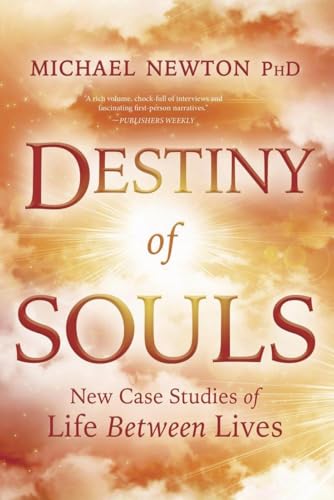
That question is at the heart of Michael Newton‘s landmark work, Destiny of Souls. Published in 2000 as the follow-up to his groundbreaking Journey of Souls, the book draws on hundreds of hypnotic regression sessions in which clients, while in deep trance, described their experiences between lives — the world they inhabit when not in a human body. Chapter One opens with one of the most intimate and compelling aspects of that world: the ability of souls to remain in contact with the living they’ve left behind.
What Newton’s Subjects Described About the Spirit World
The world of souls, as Newton’s research subjects described it, is not a vague spiritual mist. It is structured, purposeful, and deeply relational. Souls returning to it after death don’t simply float away — they have places to go, communities to return to, and, frequently, unfinished emotional business with the people they’ve left on Earth.
What surprised many of Newton’s clients during regression was how deliberate this contact is. Souls don’t drift back to the living out of confusion or attachment alone. In many cases, returning souls are permitted — even encouraged — to spend time near grieving loved ones as part of a gentle transition protocol. They observe. They send comfort. They attempt, in ways that translate across the veil between dimensions, to let those who remain know that they are not gone.
Newton’s subjects described this period with remarkable consistency. The newly deceased soul often has a heightened sensitivity to the emotional state of those left behind — almost as if grief registers as a kind of signal, a frequency that the soul can perceive and respond to. What we experience as a sudden sense of peace washing over us in the depths of sorrow may, according to this framework, be more than coincidence.
Advanced Souls and the Art of Communication
Not all communication from the spirit world is equal, Newton’s research suggests. The ability to make meaningful contact with the living appears to be related to a soul’s level of development. Newer, less experienced souls may have little capacity for sustained, intentional communication — they are themselves disoriented, in need of guidance, still processing what has happened. But more advanced souls, those with many lifetimes of accumulated experience, can communicate with considerable precision.
Newton’s subjects who were identified through regression as more evolved souls described sophisticated methods of reaching across the divide. They could project images — memories, symbols, impressions — into the minds of sleeping or meditative loved ones. They could influence the emotional atmosphere of a room. Some described being able to briefly manipulate physical elements: a photograph falling, a song playing at a meaningful moment, a candle guttering at precisely the right time.
None of this is presented as magic in Newton’s account. The framework his subjects offered is one of energy — of consciousness operating at different frequencies, with advanced souls having greater command over how and where they direct their energetic attention. The spirit world, in this view, is not separate from our world so much as it is another layer of the same reality, operating at a frequency most of us can’t normally perceive.
The Structure of the World Between Lives
Beyond its role as a staging ground for contact with the living, the spirit world Newton’s clients described is an elaborate place in its own right. It has geography — not physical, but experiential. There are areas of rest, areas of learning, areas of reunion. There is something that functions like community, like purpose, like belonging.
Souls arrive after death and are typically met — by guides, by members of their soul group, by beings whose role it is to ease the transition. Newton’s subjects described these meetings with warmth and vividness. After the disorientation of death and the journey away from the physical body, there is, almost universally, a profound sense of coming home.
What is striking is how little fear appears in these accounts. Even subjects who had led difficult lives, who had experienced traumatic deaths, who arrived in the spirit world carrying grief or confusion or regret — even they described the transition as ultimately one of relief. The heaviness of physical existence lifts. The limitations of a single body and a single lifetime’s perspective begin to fall away, replaced by something that several of Newton’s subjects described simply as knowing. A broader understanding becomes accessible again — because the soul, in its between-life state, has access to its full accumulated experience across all its lifetimes, not just the one just ended.
What This Means for Us
If Newton’s research points toward anything, it is that death is not an ending but a transition — and that transition includes, almost always, a period in which the departing soul remains close to those it loves. The «signs» that grieving people report — the sense of presence, the meaningful coincidences, the dreams that feel too real to dismiss — may be exactly what they seem: attempts at communication from a consciousness that has not vanished but simply changed form.
This matters not as abstract metaphysics but as something deeply practical. Many of Newton’s clients came to him in the grip of grief — mourning parents, partners, children. What they described under hypnosis, consistently and without prompting from Newton, was a spirit world in which their loved ones were not only intact but thriving. The woman grieving her mother was told, in effect: she is not gone. She knows you miss her. She is closer than you think.
Whether or not one accepts the literal truth of these accounts, their effect is undeniable. The world of souls that Newton’s subjects described is not a cold, indifferent void. It is a place of warmth, structure, meaning, and ongoing love — and according to those who claim to have glimpsed it, the connection between the living and the departed is not severed by death. It simply changes frequency.
The question Newton’s work asks us to sit with is not «do you believe in life after death?» It is something more immediate, more personal: what would it mean for how you grieve, how you live, how you love — if those you’ve lost were still, in some real sense, here?
Ready to explore your own between-lives experience? Find a certified LBL therapist →
Related Articles
- Why Souls Choose Difficult Lifetimes: The Purpose of Suffering
- Why Some Souls Don’t Reincarnate Immediately
- The Spirit World: Michael Newton Map of the Afterlife
- The Silver Cord: The Soul’s Connection to the Body
- The Life Review Process: How Souls Evaluate a Past Life
Recommended Books on This Topic

As an Amazon Associate, Reincarnatiopedia earns from qualifying purchases.
Disclosure: As an Amazon Associate, Reincarnatiopedia earns from qualifying purchases. This helps support our research and publishing at no extra cost to you.
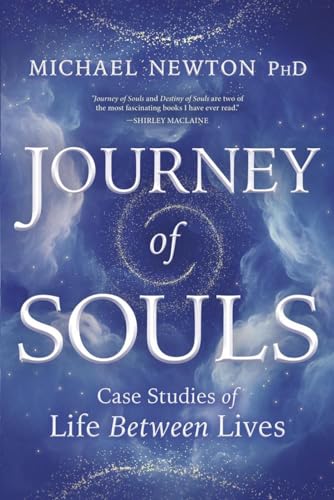
Journey of Souls: Case Studies of Life Between Lives
Michael Newton, Ph.D.
★★★★★ (4,800+ reviews) · $13.99
Newton’s landmark work — 29 case studies of people under hypnosis recounting their experiences between lives. The book that launched the field of Life Between Lives research.
Destiny of Souls: New Case Studies of Life Between Lives
Michael Newton, Ph.D.
★★★★★ (4,200+ reviews) · $11.50
The sequel to Journey of Souls — 67 new cases exploring soul groups, life planning, the Council of Elders, and soul advancement levels in the spirit world.

Life Between Lives: Hypnotherapy for Spiritual Regression
Michael Newton, Ph.D.
★★★★★ (900+ reviews) · $13.36
The professional guide to Newton’s LBL hypnotherapy method — used by certified practitioners worldwide to help clients explore their soul’s journey between incarnations.
Related Articles
- Council of Elders: Michael Newton’s Destiny of Souls
- Soul Groups in Destiny of Souls: Michael Newton’s Research
- Destiny of Souls by Michael Newton: A Guide to the Spirit World
- Unveiling the Spirit World: A Review of Michael Newton’s Destiny of Souls
- Advanced Souls in the Spirit World: Newton\’s Research
- Ghost Souls & Earth Spirits: Michael Newton Explained
- Ghost Souls and Displaced Souls: Michael Newton’s Findings
- Intermediate Souls Levels II–III: Michael Newton’s Research
- Ring of Destiny: Michael Newton’s Life Selection Theater
- Soul Community in Spirit World: Michael Newton’s Research
Have a question about this topic?
Answer based on this article