What do soul community dynamics between lives actually look like according to Michael Newton‘s research? Soul community dynamics between lives, as Newton’s regression clients described them, reveal a world of remarkable richness — souls pursuing genuine vocations, creating for the joy of it, and embedded in communities with as much texture and complexity as any human society. Far from passive clouds-and-harps, the between-life world is a place of purpose, specialization, and authentic delight.
Soul Community Dynamics: Life, Work, and Play in the Spirit World
We tend to imagine the afterlife, when we imagine it at all, in two modes: either as a state of blissful passivity — clouds, harps, eternal rest — or as a vague continuation of consciousness without much texture or specificity. Both versions share the same implicit assumption: that whatever happens after death is not quite doing anything. That the active, engaged, purposeful dimension of existence is unique to physical life.
Michael Newton‘s regression research suggests the opposite. What his clients described between lives is a world of remarkable richness and variety — one in which souls are genuinely busy, genuinely at play, genuinely working on things that matter to them, and genuinely embedded in community in ways that have as much texture and complexity as any human society. Chapter Seven of Destiny of Souls is devoted to this picture of soul community life: the specializations, the recreation, the extraordinary beings who travel beyond even the spirit world’s boundaries, and the spaces where transformation happens.
Soul Specializations: What Souls Work On
One of the more surprising elements of Newton’s between-lives research is the degree to which souls, in the spirit world, have what can only be called vocations. Not every soul is working on the same things, learning the same skills, or developing the same capacities. Just as human beings have different gifts and different callings, souls between lives pursue particular areas of specialization — and these specializations shape both what they do in the spirit world and what roles they tend to take on in physical incarnations.
Newton’s subjects described a wide variety of spiritual specializations. Some souls specialize in what might be called healing work — the maintenance and restoration of energetic states, working with newly arrived souls who need rehabilitation, tending to the energetic wellbeing of others both in the spirit world and, to the extent possible, in physical life. Others specialize in what Newton’s clients described as life planning — working with souls preparing for incarnation, helping them think through the architecture of a coming lifetime and its chosen lessons.
Some subjects described specializations in what sounded like cosmic science — understanding the structure and dynamics of physical universes, participating in what one might call the physics of creation. Others worked with what subjects could only describe as vibration or sound — something related to the tonal qualities of the spirit world and their effects on souls’ development. Still others specialized in what several clients called «the library» — an apparently vast repository of recorded experience and knowledge that souls can access between lives.
The sense that emerges is of a world as diverse and rich in purpose as any human society — perhaps more so, because purpose in the spirit world is pursued without the complications of survival, ego defense, or the simple exhaustion of keeping a body alive.
Recreation and Joy Between Lives
Not everything in the between-life world is purposeful in the directed, task-oriented sense. Newton’s clients consistently described something that functions simply as pleasure, as play, as the enjoyment of existing. This element of spirit-world life gets less attention in popular imagination than the more solemn aspects — councils, lessons, life reviews — but it appears in Newton’s research with enough frequency to take seriously.
Souls play, according to these accounts. They create — fabricating experiences for the sheer delight of it, constructing what Newton’s subjects described as something like artistic realities, spaces of beauty and imagination that serve no purpose beyond the experience of them. They joke and laugh with members of their soul group. They revisit beloved experiences from past lives, savoring the memories without being imprisoned by them.
There is something profoundly normalizing about this aspect of Newton’s research. The spirit world, in his clients’ accounts, is not exclusively solemn. Growth and wisdom and purpose are present, yes — but so is delight. The soul that loves music in human life doesn’t leave that love behind at death. The one who found joy in storytelling, in gardening, in the particular quality of light on water — that joy doesn’t disappear. It continues, in forms appropriate to a non-physical existence, and is recognized as genuinely valuable, genuinely part of what a life — any life, in any dimension — is for.
Interdimensional Travelers and the Edge of Known Space
Among the most extraordinary figures Newton’s subjects described are what might be called interdimensional travelers — souls of sufficient development and particular inclination who move beyond the boundaries of what Newton’s clients understood as «the spirit world» into dimensions they could barely describe and had difficulty finding language for.
These are not the average soul on a typical between-life rest period. They are beings who have evolved to a point where the layer of reality most souls inhabit between incarnations is itself too small to contain their curiosity or their work. They venture, in the accounts Newton gathered, to places that had no Earth equivalent, working on tasks that subjects could only gesture toward with phrases like «the architecture of realities» or «the dynamics of creation at a scale that makes solar systems look small.»
What is interesting is how Newton’s subjects described encountering these travelers — with a quality that can only be called awe. They are present in the spirit world, but not entirely of it. They move through it on their way to and from places that most souls cannot access. Their energy is described as unlike other souls’ — more intense, more complex, as if they are operating at a frequency that the ordinary between-life environment can barely contain.
Transformation Space: Where the Deep Work Happens
Newton’s Chapter Seven also touches on what might be called transformation space — areas of the spirit world dedicated not to rest or learning in the ordinary sense but to more fundamental change. Subjects who had undergone significant shifts between their most recent past life and the one being reviewed sometimes described having spent time in spaces they associated with deep structural change in their soul’s energy — not just replenishment or growth, but something closer to transformation.
These spaces were described with particular reverence. They are not easily accessed, not entered casually, and not entirely comfortable — the transformation they facilitate is real and significant, and it costs something. But what comes out the other side, according to Newton’s subjects, is a soul that is genuinely different from the one that went in: more capable, more complex, carrying new dimensions of understanding that couldn’t have been achieved through ordinary learning and review.
What This Means for Us
The soul community Newton’s clients described is, ultimately, a model of what it means to exist with both purpose and delight — and to find that these two things, rather than being in tension, are deeply complementary. In the spirit world, meaningful work and genuine play are not in conflict. Specialization is not a narrowing but an expression of what the soul is drawn to most genuinely. Community is not an obligation but a source of the deepest pleasure.
These might serve as useful mirrors for the human life we are living now. The things we are most deeply drawn to — the work that doesn’t feel like work, the communities that feel like home, the play that restores something essential — may not be distractions from purpose but expressions of it. The between-life world, in Newton’s telling, takes joy seriously. Perhaps we should too.
Ready to explore your own between-lives experience? Find a certified LBL therapist →
Related Articles
- Soul Groups in Destiny of Souls: Michael Newton’s Research
- Soul Energy Restoration Between Lives: Michael Newton
- What Happens to the Soul at the Moment of Death: Michael Newton’s Cases
- The Akashic Records and Soul Contract Review
- Soul Specialization: Healers, Teachers, and Warriors
Disclosure: As an Amazon Associate, Reincarnatiopedia earns from qualifying purchases. This helps support our research and publishing at no extra cost to you.
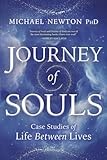
Journey of Souls: Case Studies of Life Between Lives
Michael Newton, Ph.D.
★★★★★ (4,800+ reviews) · $13.99
Newton’s landmark work — 29 case studies of people under hypnosis recounting their experiences between lives. The book that launched the field of Life Between Lives research.
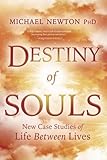
Destiny of Souls: New Case Studies of Life Between Lives
Michael Newton, Ph.D.
★★★★★ (4,200+ reviews) · $11.50
The sequel to Journey of Souls — 67 new cases exploring soul groups, life planning, the Council of Elders, and soul advancement levels in the spirit world.

Life Between Lives: Hypnotherapy for Spiritual Regression
Michael Newton, Ph.D.
★★★★★ (900+ reviews) · $13.36
The professional guide to Newton’s LBL hypnotherapy method — used by certified practitioners worldwide to help clients explore their soul’s journey between incarnations.
Related Articles
- Soul Groups and Placement: Michael Newton’s Spirit World Map
- Advanced Souls in the Spirit World: Newton\’s Research
- Soul Entering New Body at Birth: Michael Newton’s Research
- Soul Groups in Destiny of Souls: Michael Newton’s Research
- Soul Preparation Before Birth: Michael Newton’s Research
- Spirit Guides Between Lives: Michael Newton’s Research
- The Spirit World After Death: Michael Newton’s Gateway
- Spirit Guides in the Afterlife: Michael Newton’s Research on Soul Guidance
- Intermediate Souls Levels II–III: Michael Newton’s Research
- Returning to Life: Michael Newton on Soul Rebirth
Have a question about this topic?
Answer based on this article