What is the ring of destiny soul planning Michael Newton described in Destiny of Souls? The ring of destiny soul planning process Newton’s regression clients described is not fate imposed from outside — it is a deliberate, informed act of choice in which souls view multiple potential future lives and select the one that best serves their growth. In Chapter Nine of Destiny of Souls, Newton documents one of the most vivid and philosophically challenging accounts of how we arrive in our lives.
The Ring of Destiny: How Souls Choose Their Next Life
There is a question that sits at the intersection of spirituality and philosophy, one that has occupied human minds for as long as we have had minds capable of posing it: do we choose our lives, or do they happen to us? The answer we give — the one we carry in our bodies even when we’ve never articulated it — shapes everything. How we relate to suffering. How we understand our own desires and aversions. Whether we feel, in our deepest moments, like agents of our own story or like passengers in someone else’s.
Michael Newton‘s regression research offers one of the most vivid and specific answers to this question that exists in the literature on between-life experiences. Chapter Nine of Destiny of Souls is devoted to what Newton’s clients described as the Ring of Destiny — a place in the spirit world where souls go to view and ultimately select their next incarnation. What they described is not a bureaucratic process of assignment, nor a random draw. It is something closer to an act of genuine, informed choice — complicated, like all genuine choices, by the tension between what we want and what we need.
The Life Selection Theater
Newton’s regression subjects described the Ring of Destiny — the name is Newton’s synthesis of the various descriptions his clients offered — as a space that functions something like a viewing theater. Souls preparing for incarnation are able, within this space, to observe potential future lives as if watching them unfold: not as a fixed film but as something more dynamic, a kind of experiential preview that carries not just visual information but emotional resonance.
The technology of this viewing, if we can call it that, seems to work through the soul’s own energetic sensitivity. Newton’s subjects described being able to feel what it would be like to live a particular potential life — not just see the events but register the emotional and experiential texture. What would it feel like to be born into this family, in this era, with this body? What challenges would arise, and what would they cost? What opportunities would open, and what might they make possible?
This is not a passive experience. The soul moves through different potential lives, comparing them, consulting with guides, sometimes returning to a particular option multiple times before making a decision. There is deliberation involved — the kind that comes from having access to more information than any human decision-making process usually allows, but that still requires the soul to weigh competing goods against each other and ultimately commit.
Multiple Potential Lives: The Spectrum of Choice
One of the more philosophically striking elements of Newton’s account is the suggestion that souls are not typically shown a single predetermined path and asked to accept or reject it. They are shown multiple potential lives — different trajectories, different circumstances, different challenges and opportunities — and choose among them. This multiplicity is significant: it implies that the future is genuinely branching, that multiple possibilities are real until a choice is made.
Newton’s subjects described these potential lives as varying in their difficulty and developmental value. Some options were described as relatively gentle — lives with less overt challenge, more external support, less drama. Others were more demanding, carrying heavier burdens, requiring more from the soul that would live them. What subjects consistently reported was that the more demanding options were often the ones they found themselves drawn to — because from the vantage point of the spirit world, the soul can see clearly what a challenging life would make possible in terms of growth, and that clarity changes what «hard» means.
This doesn’t mean souls rush toward suffering. Newton’s subjects described this choice as genuinely weighed — guides often offered perspective on whether a soul was ready for a particular level of challenge, or whether a gentler life might serve development better at this stage. The choice is not unassisted. But it is, ultimately, a choice.
Free Will vs. Destiny: A False Division
What Newton’s research suggests about the free-will-versus-destiny debate is that the framing itself may be wrong. The Ring of Destiny is not a place where fate is imposed — but neither is it a place of unlimited, unconstrained choice. It is something more interesting: a space where souls make choices within parameters shaped by their own development, their existing soul contracts, and the genuine constraints of physical reality.
Newton’s subjects described certain elements of a chosen life as relatively fixed — the family of origin, the era and culture, certain pivotal individuals who will be encountered, certain broad experiential categories. These are the framework, chosen deliberately and not easily altered once the life begins. Within that framework, however, there is enormous room for the exercise of free will — the countless micro-choices that determine how a person responds to what happens to them, what they do with the circumstances they were born into, who they become within the life they selected.
In this model, destiny and free will are not opposites. Destiny is what the soul chose from the elevated perspective of the between-life state. Free will is how the human, from inside the life, responds to and enacts that chosen destiny. Both are real. Neither cancels the other.
Newton’s subjects described this relationship with a certain ease — as if it were obvious from the spirit-world perspective in a way that it is simply not possible to see from inside a human life. The tension we feel between fate and choice may be a product of our limited vantage point: from inside the movie, it’s impossible to see the shape of the whole story. The Ring of Destiny is, in Newton’s account, the place where you saw the whole story — and chose to live it anyway.
The Moment of Commitment
Newton’s clients described a moment in the Ring of Destiny when deliberation gives way to decision — when the soul commits to a particular life and, in doing so, sets in motion the process of incarnation. This moment was described with varying emotional tones: some subjects experienced it as straightforward and even eager, others as more solemn, others as accompanied by something that can only be described as courage.
Committing to a life — knowing what it will cost, knowing you will forget this clarity the moment you arrive in a body, knowing that the challenge you can see clearly from here will feel unbearably real from inside it — is not nothing. Newton’s subjects described it as a significant act, one that is taken seriously by everyone present: guides, soul group members, and the soul itself.
What follows this commitment, in Newton’s account, is the final preparation stage: the briefing, the merging process, the amnesia. But the Ring of Destiny is where the essential act occurs. It is where you looked at your life and said yes.
What This Means for Us
The Ring of Destiny offers, if we take it seriously, one of the more radical reframes available for our relationship with our own lives. Not comfortable, necessarily — the suggestion that you chose your particular difficulties is not always welcome news. But potentially liberating.
If the life you are living is one you selected — with clear eyes, with full knowledge of what it would require, from a vantage point of greater wisdom than you currently have access to — then it is worthy of your full engagement. The circumstances you find most frustrating may be the ones you specifically arranged to work on. The people you find most challenging may be the ones you most carefully selected. What looks from inside like obstacles may be, from the Ring of Destiny’s perspective, the whole point.
This is not a call to passivity. It is, if anything, a call to more genuine engagement — to meet your life with the same clear-eyed commitment with which you, at some level, chose it.
Ready to explore your own between-lives experience? Find a certified LBL therapist →
Related Articles
- Beginner Souls & First Incarnation: Newton\’s Findings
- Soul Preparation Before Birth: Michael Newton’s Research
- Soul Community in Spirit World: Michael Newton’s Research
- Council of Elders: Michael Newton’s Destiny of Souls
- Soul Groups in Destiny of Souls: Michael Newton’s Research
Disclosure: As an Amazon Associate, Reincarnatiopedia earns from qualifying purchases. This helps support our research and publishing at no extra cost to you.
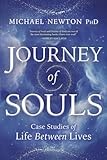
Journey of Souls: Case Studies of Life Between Lives
Michael Newton, Ph.D.
★★★★★ (4,800+ reviews) · $13.99
Newton’s landmark work — 29 case studies of people under hypnosis recounting their experiences between lives. The book that launched the field of Life Between Lives research.
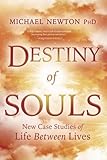
Destiny of Souls: New Case Studies of Life Between Lives
Michael Newton, Ph.D.
★★★★★ (4,200+ reviews) · $11.50
The sequel to Journey of Souls — 67 new cases exploring soul groups, life planning, the Council of Elders, and soul advancement levels in the spirit world.

Life Between Lives: Hypnotherapy for Spiritual Regression
Michael Newton, Ph.D.
★★★★★ (900+ reviews) · $13.36
The professional guide to Newton’s LBL hypnotherapy method — used by certified practitioners worldwide to help clients explore their soul’s journey between incarnations.
Related Articles
- Choosing Your Next Life: Michael Newton on Life Selection
- Choosing Your New Body: Michael Newton on Body Selection
- Council of Elders: Michael Newton’s Destiny of Souls
- Michael Newton and Life Between Lives
- Returning to Life: Michael Newton on Soul Rebirth
- Soul Groups in Destiny of Souls: Michael Newton’s Research
- World of Souls: Michael Newton’s Destiny of Souls
- Ghost Souls & Earth Spirits: Michael Newton Explained
- Ghost Souls and Displaced Souls: Michael Newton’s Findings
- Intermediate Souls Levels II–III: Michael Newton’s Research
Have a question about this topic?
Answer based on this article