Choosing a new body before a past life begins — the process Michael Newton‘s subjects described in detail — is not, according to their accounts, a matter of aesthetics. The soul selects a physical vehicle suited to the life’s specific curriculum: a body with particular vulnerabilities or strengths, hereditary tendencies, physical characteristics that will shape how others respond to you. Newton’s regression subjects described this selection process with a specificity that is hard to dismiss: they remembered choosing, and they remembered why.
The accounts Newton gathered from hundreds of hypnotic regression subjects describe a body selection process that is specific, intentional, and far more nuanced than most of us are accustomed to imagining. Souls don’t simply get assigned a body. They choose one — with awareness, with purpose, and with an understanding of what that particular physical form will make possible in the life ahead.
The Body as a Tool, Not a Verdict
One of the most important reframes that Newton’s research offers is this: the body is not a verdict on your soul’s worth. It is a tool selected for a specific journey.
Newton’s subjects described approaching body selection with a kind of practical intentionality — viewing potential bodies the way an architect might view building materials. What will this particular form allow? What limitations will it create, and what will those limitations teach? What does this body carry in terms of genetic inheritance, physical capacity, and cultural context that will shape the life in useful ways?
This is a significant departure from how many of us have been taught to think about our physical selves. The body, in Newton’s framework, is not something that happens to us. It is something we selected, with reasons — reasons that the amnesia of birth makes us temporarily unable to access, but reasons nonetheless.
How the Selection Process Works
According to Newton’s subjects, body selection takes place after the soul has chosen or is exploring a potential life. The two decisions are related but distinct: first the broad parameters of a life (time period, geographic location, key relationships), then the specific physical vehicle through which that life will be lived.
The process, as Newton’s subjects described it, involves something like an energetic preview — the soul’s energy interfacing with the developing physical form to assess compatibility and fit. This is not an arbitrary interface. Souls and bodies have affinities. The particular energetic signature of a soul doesn’t match equally well with every possible physical form, and part of what the selection process involves is finding a form that can carry the soul’s energy effectively throughout the planned life.
Newton’s subjects described being able to sense potential bodies before committing — to feel into their physical inheritance, to understand something of the temperament and tendencies the body’s genetic background would contribute. The body is not a blank slate. It comes with its own material tendencies, and the soul is choosing to work within those tendencies, with them and against them, as part of the growth process.
Physical Characteristics and Their Purposes
Perhaps the most challenging aspect of Newton’s body selection research — and the one that requires the most careful handling — is the suggestion that specific physical characteristics are chosen for specific developmental reasons.
Newton’s subjects described choosing bodies with particular physical attributes because of what those attributes would make necessary in the planned life. A body with beauty might be chosen by a soul that needs to learn about the complexities of being valued primarily for appearance — the particular loneliness that can bring. A body that will face chronic illness might be chosen because the experience of physical limitation is exactly what that soul needs to develop compassion, patience, or a particular kind of inner strength that cannot be built any other way.
This framework must be held with care, because it can be misread in ways that are harmful — particularly around disability. Newton’s research is not suggesting that people with physical disabilities are being punished or that suffering is desirable. What his subjects described is something more specific: that certain physical realities create certain developmental conditions, and that souls choose those conditions purposefully, with full understanding of what they are agreeing to.
Disabilities and the Courage of Deliberate Limitation
Several of Newton’s subjects described, during their regression sessions, choosing bodies that would involve significant physical challenges — disability, chronic illness, conditions that would make daily life more difficult. And the word that came up again and again when describing these choices was not acceptance or resignation. It was something closer to courage.
These souls, according to Newton’s accounts, understood what they were choosing. They chose it because the specific challenges of that physical reality were precisely what their developmental journey required at that stage. Some described choosing physical limitation specifically because it would force a deeper engagement with the non-physical dimensions of experience — because a life that could not rely on the body as its primary resource would have to find its center elsewhere.
This perspective doesn’t make physical difficulty easier. It doesn’t remove the reality of suffering or the genuine hardship of living in a body that creates ongoing challenges. But it does shift the frame from why is this happening to me toward something more like what is this making possible — a shift that Newton’s subjects described as one of the most significant revelations of their between-life memories.
The Genetics and Inheritance We Arrive Into
Body selection, in Newton’s framework, includes an awareness of what the chosen body carries genetically and culturally. The soul is not choosing a body in a vacuum. It is choosing a body embedded in a family, a lineage, a specific historical moment — all of which will shape the life in ways the soul factors into its decision.
Newton’s subjects described a kind of foresight in this process: understanding that the genetic inheritance of the chosen body would contribute certain tendencies, certain vulnerabilities, certain strengths. A family history of depression, of addiction, of exceptional creativity, of strong community bonds — all of these are part of what a soul considers when selecting its physical vehicle.
This doesn’t eliminate the role of free will in how those genetic tendencies play out. But it does suggest that the raw material we arrive with is not random. The particular body, with its particular inheritance and its particular cultural context, was part of the agreement — part of the design of a life intended to produce specific kinds of growth.
What This Means for Us
The body selection framework Newton’s research describes has a particular kind of healing potential, because it addresses something most of us carry: a complicated relationship with our physical selves. The features we were born with that we have spent years trying to change, minimize, or accept. The physical conditions that have shaped our lives in ways we didn’t ask for. The body that has never quite been the one we would have chosen — or so we thought.
What if you did choose it? Not in a way that lets anyone off the hook for how they have treated you, or that makes suffering acceptable, but in the deeper sense that the soul you are chose this particular physical experience because of what it would make possible — because of who it would make you.
There is something in this that takes the complicated feelings about our bodies and holds them differently. Not dismissing them, but placing them in a longer arc of meaning. Your body, with its history and its challenges and its particular way of moving through the world, was not an accident. It was a choice made by the deepest part of you, for reasons that run deeper than this single lifetime.
That doesn’t make any of it easy. But it does make it yours — truly, fully, intentionally yours.
Related Articles
- Choosing Your Next Life: Michael Newton on Life Selection
- The Silver Cord: The Soul’s Connection to the Body
- Beginner Souls & First Incarnation: Newton\’s Findings
- Spirit Guides Between Lives: Michael Newton’s Research
- Soul Groups and Placement: Michael Newton’s Spirit World Map
Disclosure: As an Amazon Associate, Reincarnatiopedia earns from qualifying purchases. This helps support our research and publishing at no extra cost to you.
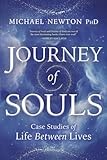
Journey of Souls: Case Studies of Life Between Lives
Michael Newton, Ph.D.
★★★★★ (4,800+ reviews) · $13.99
Newton’s landmark work — 29 case studies of people under hypnosis recounting their experiences between lives. The book that launched the field of Life Between Lives research.
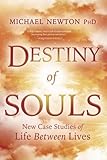
Destiny of Souls: New Case Studies of Life Between Lives
Michael Newton, Ph.D.
★★★★★ (4,200+ reviews) · $11.50
The sequel to Journey of Souls — 67 new cases exploring soul groups, life planning, the Council of Elders, and soul advancement levels in the spirit world.

Life Between Lives: Hypnotherapy for Spiritual Regression
Michael Newton, Ph.D.
★★★★★ (900+ reviews) · $13.36
The professional guide to Newton’s LBL hypnotherapy method — used by certified practitioners worldwide to help clients explore their soul’s journey between incarnations.
Related Articles
- Choosing Your Next Life: Michael Newton on Life Selection
- Soul Entering New Body at Birth: Michael Newton’s Research
- Ring of Destiny: Michael Newton’s Life Selection Theater
- Council of Elders: Michael Newton’s Destiny of Souls
- Ghost Souls & Earth Spirits: Michael Newton Explained
- Ghost Souls and Displaced Souls: Michael Newton’s Findings
- Intermediate Souls Levels II–III: Michael Newton’s Research
- Michael Newton and Life Between Lives
- Returning to Life: Michael Newton on Soul Rebirth
- Soul Community in Spirit World: Michael Newton’s Research
Have a question about this topic?
Answer based on this article