What does the spirit world after death actually look like — not as doctrine or metaphor, but as reported experience? Michael Newton‘s Journey of Souls gathers thousands of accounts from subjects who described crossing into it, and the details they returned with are remarkably consistent: a quality of light unlike sunlight, a sense of vast spaciousness, and a recognition — immediate and wordless — of having been here before.
Michael Newton spent decades in practice as a hypnotherapist before stumbling, almost by accident, into past-life regression and what he came to call Life Between Lives work. What emerged from thousands of client sessions was a remarkably consistent map of what the spirit world looks like — specifically, what souls encounter in the early moments of arrival, before reunions and reviews and assignments. Chapter 2 of Journey of Souls focuses on that gateway: the passage through the tunnel and what lies immediately beyond it.
The Tunnel as Passage
Newton’s subjects described the tunnel not as a frightening void but as a kind of atmospheric transition zone — a decompression chamber between the density of physical existence and the lighter, more expansive quality of the spirit world. Most described it as dark but not terrifying, often using sensory language that surprised them: soft, warm, quiet.
Some subjects reported moving through the tunnel quickly, pulled forward by what they described as a gentle magnetic draw. Others lingered, particularly if they had died suddenly or traumatically, taking time to adjust to the strangeness of existing without a body. Newton observed that younger souls — those with fewer lifetimes of experience — sometimes found the tunnel disorienting, while more seasoned souls navigated it with something closer to confident familiarity.
A consistent element across accounts was the absence of effort. No one in Newton’s records described swimming or struggling through the tunnel. The movement was effortless, as though the spirit world itself were drawing the soul toward it — a retrieval rather than a journey.
Layers of the Spirit World
What distinguishes Newton’s accounts from most near-death experience literature is the level of structural detail his subjects provided about the spirit world itself. Rather than describing a single undifferentiated realm of light, Newton’s clients described a layered reality — different zones or vibrational levels that became accessible as a soul moved deeper into the spirit world.
The outer layers, closest to the physical world, were described as less vivid, more muted — almost a halfway space where recently departed souls might linger before moving on. Newton’s subjects associated this zone with souls who weren’t yet ready to fully leave the physical realm: those with unresolved attachments, those who had died suddenly and hadn’t yet understood what had happened, those the living would later call ghosts.
Deeper in, the landscape shifted. Subjects described increasing luminosity, a kind of brightening of both light and color, as they moved further from the physical dimension. The spirit world, in Newton’s subjects’ descriptions, was not a single place but a spectrum — with the denser, more earth-adjacent zones at one end and what one subject called «pure light territory» at the other.
Most souls, in Newton’s accounts, didn’t make it to the deepest layers immediately upon arrival. They moved to the zone appropriate to their current level of development — a concept Newton explored extensively in later chapters through the idea of soul colors and soul groups.
The First Light
The moment his subjects described most vividly, most consistently, and most emotionally was the first encounter with the light at the end of the tunnel. This was not simply a visual experience — it was, by every account, a felt one. A sense of recognition so profound it bypassed intellectual processing entirely.
Newton’s subjects struggled to find language for this. «It’s like remembering something you didn’t know you’d forgotten,» one said. Another described it as «being known completely, without any of the performance or protection I’d spent my whole life constructing.» Several cried during these regressions — not from sadness, but from a kind of relief so deep it had no other outlet.
The light, in Newton’s framework, is not simply brightness. It is intelligence, warmth, and welcome — something between an entity and an environment. Some subjects described it as the presence of a higher power or divine energy. Others experienced it as more diffuse, less personal: simply the fundamental quality of the spirit world, the way oxygen is the fundamental quality of physical air.
What mattered to Newton’s subjects was less the metaphysical nature of the light than its emotional quality: it knew them, it welcomed them, and it carried no judgment.
What This Means for Us
The spirit world as Newton’s subjects described it is not the reward-and-punishment architecture of most religious traditions, nor the blank nothingness of strict materialism. It is something stranger and more intimate: a place that feels like the truest version of home, where the self is recognized fully and without condition.
This matters, perhaps especially now, when so many of us are navigating a complicated relationship with traditional religion while still carrying a deep, somewhat embarrassing hunger for the transcendent. We want there to be something more. We want death to be a passage rather than a wall. And we find ourselves simultaneously skeptical of easy answers and starved for the comfort they would provide.
Newton’s work doesn’t ask us to believe anything on faith. His subjects were skeptics and believers alike; their accounts didn’t depend on any prior religious framework. What they described was their own direct experience — or what they experienced as direct experience — under hypnosis. The consistency across thousands of accounts, the coherence of the structural details, the emotional weight of the descriptions: these invite a kind of open-handed consideration that has nothing to do with naive belief.
The gateway to the spirit world, as Newton’s subjects described it, is not a dramatic threshold. It is more like a gradual brightening — a slow return of something the soul has always known, layered under every human life it has ever lived. The tunnel is dark, but it doesn’t last long. The light at the end is warm. And something in us, his subjects consistently said, already knew exactly what it was.
Related Articles
- The Spirit World: Michael Newton Map of the Afterlife
- Spirit Guides in Michael Newton Research: Who They Are and What They Do
- Beginner Souls & First Incarnation: Newton\’s Findings
- Spirit Guides Between Lives: Michael Newton’s Research
- Soul Groups and Placement: Michael Newton’s Spirit World Map
Disclosure: As an Amazon Associate, Reincarnatiopedia earns from qualifying purchases. This helps support our research and publishing at no extra cost to you.
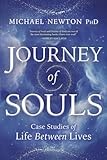
Journey of Souls: Case Studies of Life Between Lives
Michael Newton, Ph.D.
★★★★★ (4,800+ reviews) · $13.99
Newton’s landmark work — 29 case studies of people under hypnosis recounting their experiences between lives. The book that launched the field of Life Between Lives research.
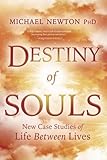
Destiny of Souls: New Case Studies of Life Between Lives
Michael Newton, Ph.D.
★★★★★ (4,200+ reviews) · $11.50
The sequel to Journey of Souls — 67 new cases exploring soul groups, life planning, the Council of Elders, and soul advancement levels in the spirit world.

Life Between Lives: Hypnotherapy for Spiritual Regression
Michael Newton, Ph.D.
★★★★★ (900+ reviews) · $13.36
The professional guide to Newton’s LBL hypnotherapy method — used by certified practitioners worldwide to help clients explore their soul’s journey between incarnations.
Related Articles
- Advanced Souls in the Spirit World: Newton\’s Research
- I Am Home: The Spirit World as Homecoming After Life
- Soul Community in Spirit World: Michael Newton’s Research
- Soul Groups and Placement: Michael Newton’s Spirit World Map
- Soul Reunion After Death: Michael Newton on Homecoming
- Destiny of Souls by Michael Newton: A Guide to the Spirit World
- The Spirit World: Michael Newton Map of the Afterlife
- Unveiling the Spirit World: A Review of Michael Newton’s Destiny of Souls
- Soul Transition Between Lives: The Spirit World Staging Area
- Souls Comforting the Grieving: Michael Newton’s Research
Have a question about this topic?
Answer based on this article