Ghost souls — or displaced souls, as Michael Newton calls them — are not the stuff of horror films. They are, according to the regression accounts Newton gathered, simply souls who have not fully released their attachment to the life they have just left: a place, a person, an unresolved grief. The pull is strong enough that instead of moving through to the spirit world, they remain. Suspended. Neither here nor there.
Michael Newton spent decades asking precisely these questions — not philosophically, but empirically, through thousands of hypnotic regression sessions in which clients described their experiences between lifetimes. What emerged from his research, documented in Journey of Souls, included accounts of souls who didn’t follow the expected path toward the spirit world after death. Chapter 4 explores these displaced souls: what they are, what keeps them earthbound, and what ultimately happens to them.
What Newton’s Subjects Described as Ghost Souls
In Newton’s framework, the term «ghost soul» doesn’t carry supernatural horror-movie connotations. It refers simply to a soul that, after physical death, remains in close proximity to the physical dimension rather than moving through the tunnel toward the spirit world. Newton’s subjects described occasionally encountering these souls — sometimes during the period immediately after their own deaths, sometimes in ways they experienced as crossing paths during subsequent lifetimes.
The reasons souls remained earthbound, according to Newton’s subjects, fell into several categories. Most commonly: attachment. A soul who died while deeply invested in a particular relationship, a particular place, or a particular unresolved situation might not be ready to leave the vicinity of that attachment. The tunnel and the light were available — Newton’s subjects described these as always accessible, never locked — but the pull of the unfinished earthly business was stronger than the pull forward.
Other souls described by Newton’s subjects seemed confused rather than deliberately attached — particularly those who had died suddenly and hadn’t yet understood what had happened. These souls lingered in familiar places, interacting with the physical world in limited ways, often waiting for recognition or connection from the living people around them.
Aberrant Souls and Karmic Consequences
Newton also documented a more troubling category: what he called aberrant souls — those who had made choices in their most recent physical lifetime so deeply contrary to their soul’s growth that they arrived in the spirit world carrying significant energetic weight. These souls were not punished by external forces, according to Newton’s subjects’ accounts. The consequences were internal: an inability to move easily into the lighter zones of the spirit world, a heaviness that kept them in the denser, more earth-adjacent layers.
Newton was careful about this territory. He was not describing a hell — there was no torment, no eternal damnation, no punishing authority waiting on the other side. What his subjects described was more like a natural law: the energetic quality a soul carried reflected the choices it had made, and that energetic quality determined where, in the layered structure of the spirit world, the soul could initially go.
Souls that had caused serious harm — through cruelty, through deliberate manipulation, through choices made fully aware of their damage — arrived in the spirit world as something like a very dense, heavy form of energy. Moving through that density into the lighter zones required time and, eventually, another lifetime with specific learning opportunities designed to address the patterns that had created the damage.
The Path Back
What Newton found — and what his subjects described consistently — was that displacement, however it was caused, was always temporary. No soul was permanently stuck. The spirit world, in Newton’s framework, is not a realm of fixed judgments but a dynamic system oriented toward growth and eventual return.
Earthbound souls who remained near the physical world out of attachment were, over time, gently assisted toward the transition. Newton’s subjects described meeting guides whose specific function was this work: patiently waiting with lingering souls, helping them understand what had happened and what was available to them, until the soul was ready to move forward. The word several subjects used was «coaxing» — as though the guide’s role was less a command than a persistent, loving invitation.
Aberrant souls, similarly, were not abandoned. Newton’s subjects described a process of review, recalibration, and eventually reassignment — a new lifetime constructed specifically to provide the experiences that would allow the soul to understand and transform the patterns that had caused harm. The emphasis, throughout Newton’s accounts, was on learning rather than punishment. The universe, as his subjects described it, is not punitive. It is educational.
What This Means for Us
Newton’s accounts of displaced and aberrant souls invite us to reconsider some of the stories we’ve inherited about what happens after death. The framework of eternal reward and punishment — heaven for the good, hell for the bad — is replaced in Newton’s subjects’ descriptions by something more dynamic and, in some ways, more demanding: a system in which every soul is ultimately accountable to its own growth, and in which the consequences of choices are real but not permanent.
This is simultaneously more and less comforting than traditional religious frameworks, depending on where you’re standing. For those who have lost someone who lived with cruelty or addiction or choices they seemed unable to stop making, Newton’s accounts offer a particular kind of solace: the soul, in the end, is not its worst moments. It has more lifetimes ahead of it, more opportunities to understand, more chances to become what it is ultimately capable of being.
For those who wonder about the people they’ve lost who seemed not quite present — the ones who behaved oddly, who seemed attached to old patterns, who never quite made it to the light of their own lives — Newton’s displaced soul accounts are unexpectedly tender. A soul that lingers isn’t lost. It’s just not ready yet. And somewhere, patient and unhurried in the way that only beings outside of time can be, a guide is waiting.
The spirit world, in Newton’s description, has enormous tolerance for the pace of each soul’s journey. No one gets left behind. Some just take longer to find their way to the door.
Related Articles
- Soul Energy Restoration Between Lives: Michael Newton
- What Happens to the Soul at the Moment of Death: Michael Newton’s Cases
- The Akashic Records and Soul Contract Review
- Soul Specialization: Healers, Teachers, and Warriors
- How souls plan future incarnations and how regression can reveal this blueprint
Disclosure: As an Amazon Associate, Reincarnatiopedia earns from qualifying purchases. This helps support our research and publishing at no extra cost to you.
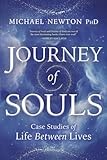
Journey of Souls: Case Studies of Life Between Lives
Michael Newton, Ph.D.
★★★★★ (4,800+ reviews) · $13.99
Newton’s landmark work — 29 case studies of people under hypnosis recounting their experiences between lives. The book that launched the field of Life Between Lives research.
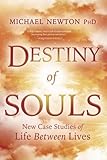
Destiny of Souls: New Case Studies of Life Between Lives
Michael Newton, Ph.D.
★★★★★ (4,200+ reviews) · $11.50
The sequel to Journey of Souls — 67 new cases exploring soul groups, life planning, the Council of Elders, and soul advancement levels in the spirit world.

Life Between Lives: Hypnotherapy for Spiritual Regression
Michael Newton, Ph.D.
★★★★★ (900+ reviews) · $13.36
The professional guide to Newton’s LBL hypnotherapy method — used by certified practitioners worldwide to help clients explore their soul’s journey between incarnations.
Related Articles
- Ghost Souls & Earth Spirits: Michael Newton Explained
- Beginner Souls & First Incarnation: Newton\’s Findings
- Council of Elders: Michael Newton’s Destiny of Souls
- Intermediate Souls Levels II–III: Michael Newton’s Research
- Michael Newton and Life Between Lives
- Soul Groups and Placement: Michael Newton’s Spirit World Map
- Soul Groups in Destiny of Souls: Michael Newton’s Research
- Souls Comforting the Grieving: Michael Newton’s Research
- The Michael Newton Institute: History, Training, and Legacy
- World of Souls: Michael Newton’s Destiny of Souls
Have a question about this topic?
Answer based on this article