Soul groups and placement in the spirit world — the process by which newly returned souls are reunited with their cluster of closely bonded companions — is one of the most emotionally resonant aspects of Michael Newton‘s research. The people who feel like more than acquaintances, the ones who knew you before you explained yourself, the ones whose absence would feel like a missing piece: Newton’s subjects consistently reported that these relationships are not accidents. They are arrangements.
Michael Newton’s subjects, describing the spirit world under deep hypnosis, described a system of organization that takes that wondering seriously. Chapter 7 of Journey of Souls maps what Newton called soul groups and placement: the way souls are organized in the spirit world based on their development level and their bonds with each other, and how each soul is guided to its right place after the transition period.
What Soul Groups Are
In Newton’s framework, every soul belongs to a soul group — a cluster of souls who share a long history, who incarnate in relation to each other across multiple lifetimes, and who come together in the spirit world between lives for shared learning, reflection, and preparation. Newton’s subjects described these groups with specificity and warmth: they knew their group members, loved them, and recognized them immediately upon arrival.
Soul groups are not simply social clusters. They are, according to Newton’s subjects, the soul’s primary relational community across the entire arc of its development — not just one lifetime or one era, but the whole journey. The same souls who appear as your mother in one lifetime might appear as your best friend in another, or your teacher, or your adversary. The roles change; the bonds persist.
Newton observed that the size of soul groups varied, though most of his subjects described their primary group as relatively intimate — somewhere between three and twenty-five souls, with many subjects describing groups of ten to fifteen as typical. This is the inner circle, the closest bonds, the souls whose energies are most deeply familiar.
Primary and Secondary Clusters
Newton introduced an important structural nuance that his subjects described consistently: the distinction between primary and secondary soul clusters. The primary soul group is the intimate inner circle — the souls most closely bonded, most likely to incarnate together, most central to each other’s ongoing development. The secondary cluster is larger, more diverse, and represents a wider community of souls at similar developmental levels.
Subjects described the secondary cluster as something like an extended community — familiar, connected, but without the same depth of bond as the primary group. Souls in the secondary cluster might share a lifetime peripherally — the colleague who influences your thinking, the neighbor whose existence matters to yours in ways neither of you fully understands, the stranger whose action at a critical moment changed the course of your story.
Newton’s subjects described moving between these levels of community in the spirit world — spending most time with their primary group but also engaging with the broader secondary cluster in learning settings, group activities, and what some subjects described as something like classes or workshops. The spirit world, in their accounts, was not a static resting place but a dynamic environment of continued growth and relationship.
Soul Colors and Development Levels
Among the most distinctive elements of Newton’s accounts is the description of soul colors — a visual representation of each soul’s development level and individual nature that was apparent to his subjects in the spirit world.
Newer souls, those with fewer lifetimes of experience, were described as lighter, softer colors — whites and pale yellows. More experienced souls showed deeper, richer colors: gold, deep blue, violet. The most advanced souls his subjects encountered were described in terms of intense luminosity — colors that subjects struggled to name because they seemed to exceed the visible spectrum, or to combine qualities that don’t combine in physical light.
Newton was careful to note that these color gradations were not hierarchical in the sense of some souls being valued more than others. They were descriptive — simply a visible marker of where in the long arc of development a particular soul currently sat. A newer soul was not inferior to an older one, any more than a child is inferior to an adult. It was simply earlier in a journey that all souls were making.
The colors were also, his subjects noted, individual — each soul had its own particular hue or combination within its developmental range, as distinctive as a fingerprint. This was part of how soul group members recognized each other: not by face or voice but by the specific frequency of each other’s energy, which the color system expressed visually.
The Placement Process
Newton’s subjects described placement — the process by which each soul arriving in the spirit world was guided to its appropriate location — as gentle and purposeful rather than arbitrary or administrative. Guides played a central role: they knew where each soul belonged and accompanied it toward its soul group, through whatever transitional zones were needed.
The placement process was responsive to where the soul actually was, energetically — not where it had been in a previous between-lives period, but where it had arrived after completing its most recent physical lifetime. Growth was reflected in the soul’s energetic state, which in turn affected placement. A soul that had made significant progress in its most recent lifetime might find itself placed in a slightly different zone than before, among souls whose development now more closely matched its own.
This aspect of Newton’s accounts offered his clients something unexpected: the recognition that growth is real and cumulative. The work done in a physical lifetime — the challenges faced, the choices made, the love practiced — doesn’t evaporate at death. It is literally carried in the soul’s energetic state, visible to other souls, and reflected in where the soul is placed and with whom it learns.
What This Means for Us
The soul group system Newton’s subjects described offers a frame for understanding the most significant relationships of our lives — the ones that feel, inexplicably, like more than chance.
If Newton’s accounts are pointing toward anything true, then the people who feel like our deepest bonds are not random. They are souls we’ve known across many lifetimes, who have agreed to appear in our current life — often in roles quite different from the ones they’ve played before — to continue the shared work of each other’s development. The difficulty of a particular relationship, the unexpected depth of a connection, the sense of unfinished business with someone: all of these take on a different quality when placed within a framework of long, cross-lifetime history.
This doesn’t make human relationships less complicated. The soul who was your greatest support in a previous lifetime may be your most challenging relationship in this one — by design, because that particular tension offers the growth both souls currently need. The framework doesn’t dissolve difficulty; it contextualizes it.
What it does offer is a kind of underlying trust: the relationships that matter most are not accidents. The people in your primary soul cluster have been finding each other across many lifetimes, in many forms, toward the shared work of becoming more fully what souls are capable of being. The recognition you feel for certain people is real, and it is old, and it points toward something that began long before this particular chapter started.
Related Articles
- Beginner Souls & First Incarnation: Newton\’s Findings
- Spirit Guides Between Lives: Michael Newton’s Research
- Soul Transition Between Lives: The Spirit World Staging Area
- Life Review After Death: Soul Orientation Without Punishment
- Ghost Souls and Displaced Souls: Michael Newton’s Findings
Disclosure: As an Amazon Associate, Reincarnatiopedia earns from qualifying purchases. This helps support our research and publishing at no extra cost to you.
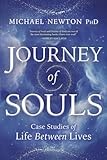
Journey of Souls: Case Studies of Life Between Lives
Michael Newton, Ph.D.
★★★★★ (4,800+ reviews) · $13.99
Newton’s landmark work — 29 case studies of people under hypnosis recounting their experiences between lives. The book that launched the field of Life Between Lives research.
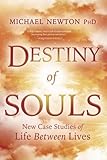
Destiny of Souls: New Case Studies of Life Between Lives
Michael Newton, Ph.D.
★★★★★ (4,200+ reviews) · $11.50
The sequel to Journey of Souls — 67 new cases exploring soul groups, life planning, the Council of Elders, and soul advancement levels in the spirit world.

Life Between Lives: Hypnotherapy for Spiritual Regression
Michael Newton, Ph.D.
★★★★★ (900+ reviews) · $13.36
The professional guide to Newton’s LBL hypnotherapy method — used by certified practitioners worldwide to help clients explore their soul’s journey between incarnations.
Related Articles
- Soul Community in Spirit World: Michael Newton’s Research
- Soul Groups in Destiny of Souls: Michael Newton’s Research
- The Spirit World After Death: Michael Newton’s Gateway
- The Spirit World: Michael Newton Map of the Afterlife
- Advanced Souls in the Spirit World: Newton\’s Research
- Ghost Souls and Displaced Souls: Michael Newton’s Findings
- Michael Newton and Life Between Lives
- Returning to Life: Michael Newton on Soul Rebirth
- Soul Energy Restoration Between Lives: Michael Newton
- Soul Entering New Body at Birth: Michael Newton’s Research
Have a question about this topic?
Answer based on this article