Spirit guides, as Michael Newton‘s between-lives research describes them, are not guardian angels in the devotional sense — they are something more specific and, in some ways, more interesting: advanced souls assigned to accompany a developing soul across multiple lifetimes, present during the planning of each life, available during the most critical junctures. Newton’s subjects described them consistently: a presence that felt both deeply familiar and, in some quality, larger than themselves.
Michael Newton’s Journey of Souls takes that sense with complete seriousness. Chapter 8 is devoted to what his thousands of hypnotic regression subjects described as their most constant and intimate relationship in the spirit world: their guides. Not angels in a religious sense, not supernatural figures with inscrutable agendas — but specific, beloved, deeply known beings who accompany each soul across multiple lifetimes and between them.
What Guides Actually Are
The first thing Newton’s subjects consistently clarified — often before Newton even asked — was that their guides were not strangers. They were not emissaries from a remote divine authority, appearing in official capacity. They were known, specific, intimately familiar. The relationship, as subjects described it, was less like the relationship between a worshiper and a deity and more like the relationship between a student and a beloved teacher who has known you long enough to see both your highest potential and your most persistent resistance.
In Newton’s framework, guides are more advanced souls — beings who have completed more of their own developmental journey and have taken on the particular role of accompanying a younger soul through its ongoing lifetimes and between-lives periods. This is not a professional assignment or a random pairing. Newton’s subjects described the guide relationship as something that evolved organically: a particular advanced soul, drawn by affinity and purpose, choosing to invest in the growth of a particular younger soul.
The relationship is therefore mutual, even if asymmetrical. Guides are not omniscient supervisors. They are beings who care, specifically, about this particular soul — who have watched it across many lifetimes, who understand its patterns and growth edges and characteristic struggles, and who accompany it with a combination of deep knowledge and genuine affection.
Levels of Guides
Newton’s subjects described a layered structure among guides — not all guides operated at the same level of development or held the same kind of relationship with the souls they accompanied. What emerged from his sessions was something like a progression.
Primary guides — the ones most directly involved in a soul’s ongoing development — were described as the most consistently present: the being at the threshold when the soul returned to the spirit world, the presence during the life review, the companion across the between-lives period. These guides had been with their charges across many lifetimes and were described by Newton’s subjects in terms of a warmth and familiarity that bordered on the quality of a parent-child or close sibling bond.
Some subjects also described secondary guides: more specialized beings who appeared at particular junctures in the soul’s development, or who offered specific kinds of support that fell outside the primary guide’s particular expertise. Newton observed that as souls developed and took on more complex lifetimes with more demanding growth challenges, the level and type of guidance available to them seemed to expand accordingly.
The most advanced souls Newton encountered in his sessions described something different still: beings of extraordinary luminosity and scope who served as guides to guides — the elders of the spirit world, operating at levels of development that Newton’s subjects found difficult to describe in human terms. These beings appeared rarely, for specific purposes, and their presence was experienced as something like the difference between a candle and the sun.
The Guide’s Role During Physical Life
Newton’s subjects were emphatic on a point that challenges conventional spirituality: guides do not intervene directly in the lives of the souls they accompany. They watch, they hope, they sometimes nudge — but the principle of free will is fundamental to Newton’s entire framework, and guides operate fully within it.
Subjects described their guides as present during their physical lifetimes in a witnessing capacity — aware of what was happening, emotionally invested in the soul’s choices and growth, but not overriding those choices. The nudges subjects described — the sense of being guided toward a decision, the feeling of something that might be called intuition — were less direct interference and more a quality of subtle influence, a way of making certain options feel more salient without removing the soul’s agency to choose otherwise.
Several of Newton’s subjects, in describing their between-lives conversations with their guides, encountered something they found both humbling and reassuring: the guide had watched their entire most recent lifetime with complete attention. Every choice, every moment, every internal experience — all of it witnessed, held, and understood in full context. The life review was not, in this light, a revelation to the guide. It was a shared looking-back on something the guide had watched in real time.
The emotional quality of this — being fully witnessed without judgment, for an entire lifetime — was described by Newton’s subjects as one of the most moving aspects of the guide relationship. In physical life, we are rarely fully seen. We manage what others know of us. We protect ourselves from complete exposure. The guide, in Newton’s accounts, knows everything and continues to accompany us anyway.
What This Means for Us
The guide relationship Newton’s subjects described offers something that many of us are hungry for without quite being able to name it: the experience of being fully known and accompanied by something that doesn’t require anything from us in return.
In physical life, every relationship involves negotiation. Even our closest bonds involve some degree of managing how we are seen, some areas we protect, some limits on how much of ourselves we bring. The guide relationship, as Newton’s subjects described it, has none of that. The guide knows all of it already — the entire arc of the soul’s development across all its lifetimes, the specific patterns that persist, the characteristic moments of both courage and failure. And the guide stays. Not because it is obligated to, but because the bond, forged across enormous stretches of shared history, is genuine.
For those of us who carry the particular loneliness of feeling unseen — who have constructed careful presentations of ourselves to navigate a world that doesn’t always respond well to full transparency — Newton’s guide accounts offer an unusual comfort: somewhere, something that knows exactly who you are, all the way down, has been watching you with full attention and consistent affection for longer than you have access to remembering.
The guides in Newton’s accounts are not wish fulfillment. They do not rescue. They do not remove the difficulty or the consequences of the choices made in each lifetime. They witness, they support, they review, and they help plan the next attempt — the next lifetime with its specific growth opportunities and challenges, designed in collaboration with the soul itself.
What they offer is not protection from the hard parts of being human. It is the knowledge that none of it is faced alone, and that every version of us — including the versions we’re most ashamed of — has been accompanied, understood, and held within a relationship older and more durable than anything we can currently remember.
That sense of being nudged, of something accompanying us: perhaps it is not as embarrassing to take seriously as we thought.
Related Articles
- Spirit Guides in Michael Newton Research: Who They Are and What They Do
- Beginner Souls & First Incarnation: Newton\’s Findings
- Soul Groups and Placement: Michael Newton’s Spirit World Map
- Soul Transition Between Lives: The Spirit World Staging Area
- Life Review After Death: Soul Orientation Without Punishment
Disclosure: As an Amazon Associate, Reincarnatiopedia earns from qualifying purchases. This helps support our research and publishing at no extra cost to you.
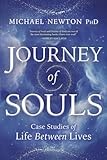
Journey of Souls: Case Studies of Life Between Lives
Michael Newton, Ph.D.
★★★★★ (4,800+ reviews) · $13.99
Newton’s landmark work — 29 case studies of people under hypnosis recounting their experiences between lives. The book that launched the field of Life Between Lives research.

Destiny of Souls: New Case Studies of Life Between Lives
Michael Newton, Ph.D.
★★★★★ (4,200+ reviews) · $11.50
The sequel to Journey of Souls — 67 new cases exploring soul groups, life planning, the Council of Elders, and soul advancement levels in the spirit world.

Life Between Lives: Hypnotherapy for Spiritual Regression
Michael Newton, Ph.D.
★★★★★ (900+ reviews) · $13.36
The professional guide to Newton’s LBL hypnotherapy method — used by certified practitioners worldwide to help clients explore their soul’s journey between incarnations.
Related Articles
- Michael Newton and Life Between Lives
- Soul Community in Spirit World: Michael Newton’s Research
- Soul Energy Restoration Between Lives: Michael Newton
- Michael Newton: Pioneer of Life Between Lives Hypnotherapy & Soul Research
- Spirit Guides in Michael Newton Research: Who They Are and What They Do
- Spirit Guides in the Afterlife: Michael Newton’s Research on Soul Guidance
- Advanced Souls in the Spirit World: Newton\’s Research
- Intermediate Souls Levels II–III: Michael Newton’s Research
- Soul Entering New Body at Birth: Michael Newton’s Research
- Soul Groups and Placement: Michael Newton’s Spirit World Map
Have a question about this topic?
Answer based on this article