Beginner souls embarking on their first incarnation — souls who have never before worn a human body — carry a quality that Newton’s more experienced subjects consistently recognised and described: luminous, overwhelmed, and completely unprepared for the density of physical life. Michael Newton‘s regression work captured dozens of accounts of this threshold moment, and what emerges is unexpectedly tender: the first time is nothing like subsequent lives, in ways that explain a great deal about the people we sometimes encounter who seem to be meeting ordinary human difficulty for the very first time.
Michael Newton spent decades guiding hundreds of clients through hypnotic regression into their between-life states. What emerged from those sessions, documented in his 1994 book Journey of Souls, paints a surprisingly tender picture of what it means to be new. New to Earth. New to pain. New to the strange, beautiful weight of being human.
The Spiritual Nursery: Where Young Souls Begin
According to Newton’s research, beginner souls don’t simply materialize on Earth without preparation. Before their first incarnation, they spend time in what his subjects described as something resembling a spiritual nursery or orientation space — a protected, nurturing environment where newly formed souls begin to understand what consciousness even is.
These young souls exist as pure energy, typically described as white or light-colored, not yet having taken on the deeper hues that Newton’s subjects associated with experience and development. They are curious, playful, and — most strikingly — deeply innocent. Not innocent in the sense of being ignorant, but in the sense of being entirely unguarded. There is no armor yet. No defensive self. Just a being discovering what it means to be.
The guides assigned to these new souls are described as extraordinarily patient. Newton’s subjects recalled watching over younger souls in their own later sessions, describing the experience as caring for something precious and easily overwhelmed. The learning in this early phase is gentle and gradual — more like being held than being taught.
Level I: The First Step on a Very Long Journey
Newton’s framework for soul development spans five general levels, with Level I representing the earliest stage of incarnating souls. These are the beginners, and their first lives on Earth reflect exactly that.
First incarnations, according to the accounts gathered by Newton, tend to be relatively simple in structure. Not easy — no human life is truly simple — but chosen with care to introduce the soul to embodied experience without overwhelming it entirely. A quiet rural life. A short lifespan. A contained set of relationships and challenges that allow the soul to begin understanding concepts it has never encountered before: physical sensation, emotional attachment, loss, time.
What’s striking about Newton’s subjects describing their own first lives — or describing watching other souls in theirs — is the theme of shock. The density of physical existence, the relentlessness of linear time, the way emotions arrive unbidden and enormous — all of it lands differently in a body than it did as energy. Beginner souls often describe being overwhelmed in their early lives. Not broken, but genuinely surprised by the intensity of it all.
The Difference Between Young and Immature
One clarification that comes through clearly in Newton’s research deserves attention, because it shifts something important: a beginner soul is not a lesser soul. The language of «levels» can imply hierarchy in a way that misses the point entirely.
Newton’s subjects consistently described newer souls with warmth and respect, not condescension. A young soul is simply a soul that hasn’t yet had many trips around the loop. They bring qualities that more experienced souls have often lost touch with: spontaneity, openness, a kind of radiant directness. They haven’t yet learned to be careful or guarded or strategic. They feel everything immediately and completely.
In fact, several of Newton’s subjects described being drawn to beginner souls in their spirit groups precisely because of this quality. There is something revitalizing about proximity to a being that hasn’t yet learned to be anything other than exactly what it is.
First Incarnations and the People Who Share Them
Newton’s research suggests that beginner souls rarely incarnate alone into unfamiliar territory. Their first lives tend to include at least one or two souls from their primary spirit group — beings they have known in the spirit world and who have agreed, on some level, to be present during this enormous first step.
This means that the person who feels like an old friend the moment you meet them might genuinely be one — not metaphorically, but in the deepest sense. Soul recognition, as Newton’s subjects described it, is real, and it often begins long before either party has words for it.
For beginner souls, these anchoring relationships are essential. They provide continuity — a thread of familiarity in an experience that is otherwise entirely new. Newton’s subjects described watching young souls light up in recognition when they encountered their companions in a first life, even as infants, even before language. Something in the energy signature was familiar. Something felt like home even in the middle of all that newness.
What This Means for Us
If Newton’s research resonates at all, it opens up a quietly radical way of looking at the people around us. The person in your life who seems most lost — most reactive, most easily overwhelmed, most openhearted in a way that sometimes tips into chaos — might not be broken. They might simply be early in a very long journey, doing exactly what they’re supposed to be doing in exactly the stage they’re supposed to be in.
It also reframes what we might think of as spiritual advancement. If beginner souls carry qualities that more experienced souls sometimes lose — that quality of being fully present to experience without the buffer of accumulated wisdom and caution — then perhaps there is something to learn from them, not just something to pity or fix.
And for those who feel, somewhere underneath daily life, like they are seeing all of this for the first time — like the world is bigger and stranger and more overwhelming than anyone else seems to find it — maybe that feeling is information. Maybe it is simply the feeling of a soul still close to its beginning.
The nursery, after all, is not a place of limitation. It is where everything starts.
Related Articles
- Advanced Souls in the Spirit World: Newton\’s Research
- Intermediate Souls Levels II–III: Michael Newton’s Research
- Why Souls Choose Difficult Lifetimes: The Purpose of Suffering
- Why Some Souls Don’t Reincarnate Immediately
- The Silver Cord: The Soul’s Connection to the Body
Disclosure: As an Amazon Associate, Reincarnatiopedia earns from qualifying purchases. This helps support our research and publishing at no extra cost to you.
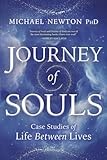
Journey of Souls: Case Studies of Life Between Lives
Michael Newton, Ph.D.
★★★★★ (4,800+ reviews) · $13.99
Newton’s landmark work — 29 case studies of people under hypnosis recounting their experiences between lives. The book that launched the field of Life Between Lives research.
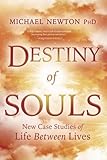
Destiny of Souls: New Case Studies of Life Between Lives
Michael Newton, Ph.D.
★★★★★ (4,200+ reviews) · $11.50
The sequel to Journey of Souls — 67 new cases exploring soul groups, life planning, the Council of Elders, and soul advancement levels in the spirit world.

Life Between Lives: Hypnotherapy for Spiritual Regression
Michael Newton, Ph.D.
★★★★★ (900+ reviews) · $13.36
The professional guide to Newton’s LBL hypnotherapy method — used by certified practitioners worldwide to help clients explore their soul’s journey between incarnations.
Related Articles
- Ghost Souls and Displaced Souls: Michael Newton’s Findings
- Advanced Souls in the Spirit World: Newton\’s Research
- Council of Elders: Michael Newton’s Destiny of Souls
- Ghost Souls & Earth Spirits: Michael Newton Explained
- Intermediate Souls Levels II–III: Michael Newton’s Research
- Soul Groups in Destiny of Souls: Michael Newton’s Research
- Souls Comforting the Grieving: Michael Newton’s Research
- World of Souls: Michael Newton’s Destiny of Souls
- A Skeptic’s First LBL: Just a Couple Questions
- Animal Souls and Past Lives: What a Goose Revealed
Have a question about this topic?
Answer based on this article