Spiritual awakening through past life regression doesn’t usually happen the way intellectuals expect it to. This story from Memories of the Afterlife follows a woman with a graduate degree in philosophy — someone who had spent two decades thinking rigorously about consciousness and meaning — whose LBL session bypassed every analytical framework she had built and landed her, finally and irreversibly, in direct experience. She did not lose her mind. She found the part of it that thinking alone could never reach.
What she could not tell you was why none of it helped.
The case of a highly analytical client documented by JanelleMarie, a certified LBL therapist based in California and a contributor to Memories of the Afterlife (2009), edited by Michael Newton, is a story about the particular trap that intelligence builds for itself — and about what a spiritual awakening actually looks like when it arrives not as a thought, but as a feeling.
She came to LBL therapy as a last resort. She was explicit about not believing in it. The therapist reported that she arrived with a kind of polite skepticism that was clearly holding something much less polite underneath: a quiet, accumulated exhaustion with having analyzed everything and understood nothing that mattered.
A Mind That Had Never Stopped Working
There is a specific quality of loneliness that belongs to people who are very good at thinking. It is the loneliness of someone who has outpaced the answers available to them, who keeps moving the question forward into more sophisticated territory because staying still with it feels too close to giving up.
This client had done that for two decades. The therapist reported that her initial sessions showed a characteristic pattern: when something emotionally significant surfaced, she would immediately locate it inside an intellectual framework. She didn’t avoid feelings exactly — she processed them at high speed and converted them into ideas. It was efficient. It was impressive. And it kept her safely out of reach of anything that might actually change her.
According to Newton’s method, life between lives regression uses deep hypnosis to guide a client through the death experience of a previous lifetime and into the spirit realm — the place between incarnations where souls review what has passed, reconnect with their groups, and prepare for what comes next. The method bypasses analytical resistance not through argument but through depth. At a certain level of relaxation, the thinking mind simply runs out of things to say.
The therapist reported that the shift, when it came, was visible. The characteristic tightness in this client’s jaw and shoulders began to release. The careful, managed quality of her responses softened. Something underneath the analysis was coming forward, and it spoke in a register she had almost no experience of: not thought, but felt.
She said afterward that the first unfamiliar thing she encountered under LBL hypnosis was not a memory or a vision. It was a quality of being she didn’t have words for. Something vast. Something that knew her completely and was completely indifferent to her credentials.
What the Soul World Offered That Ideas Could Not
The spirit world, as documented across Newton’s casework and in the therapist-contributed stories of Memories of the Afterlife, is experienced by clients not primarily as a place but as a state. A state of reduced separation — between self and other, between inner and outer, between who you believe yourself to be and who you actually are.
For someone who had spent her adult life in the fortress of her intellect, the encounter with this state was disorienting in the best possible sense. The therapist reported that the client described feeling recognized, not understood. She had been understood her whole life — appreciated for her intelligence, engaged with on the level of ideas. Being recognized was different. It was prior to ideas. It was the direct apprehension of something that didn’t require her to say anything right.
The client recalled under LBL hypnosis the moment she encountered her soul group — the constellation of souls she has shared multiple lifetimes with — and the force of the recognition. She knew them. Not as memories she was retrieving, but as presences she was returning to. And she felt, for the first time she could identify, what it was like to be known without performing.
According to Newton’s method, soul groups maintain their quality of connection across incarnations even as they take on different roles relative to one another. What remains constant is not the relationship structure but the underlying resonance — something closer to love, in the broadest sense, than to any specific human bond.
For this client, whose adult intellectual life had produced a subtle but persistent sense of isolation — the loneliness of being surrounded by people who engaged her mind but somehow missed her — the soul group encounter was the evidence she had been looking for. Intimacy was real. She was capable of it. She had simply been looking for it in the wrong register.
The Soul Mission She Had Misunderstood Her Entire Career
The therapist reported that the central revelation of the session was this: the client had been using her greatest gift for the wrong purpose.
She had understood her life mission, to whatever extent she’d considered it, as the pursuit of knowledge. Understanding for its own sake. The accumulation of intellectual clarity as an end in itself. And she had been very, very good at it.
What emerged in the LBL session was a different picture entirely. The client recalled under LBL hypnosis a council meeting — the between-life gathering with elder guides that Newton’s method documents consistently — in which her soul purpose was addressed with characteristic directness. The guides, she reported, were not unkind. But they were clear: her gift was not the thinking. The thinking was the preparation.
Her actual soul mission was to be a bridge — to take the complex, abstract understanding she had spent lifetimes developing and translate it into forms that could reach people who didn’t have her framework. Not to produce scholarship, but to produce transmission. Her intelligence was the vocabulary. What she was meant to say with it was something far more personal, far more exposed, than she had ever allowed herself.
The therapist described this as a subtle but devastating reframe. The client had been using her greatest capacity — her ability to hold complexity without needing to resolve it — as a shield. A place to live. The very thing that was meant to serve others had become the thing that kept her separate from them.
According to Newton’s method, soul purposes rarely arrive as grandiose missions. They tend to be quiet, specific, and often uncomfortably close to whatever a person has been most avoiding. What the council communicated to this client was not that she had wasted her life. It was that she had been training for a long time, and it was time to actually start.
When the Body Knows Before the Mind Does
There is a moment that the therapist JanelleMarie reported with particular care: the moment the client made contact with her soul purpose — not cognitively, not as an idea she could evaluate, but as a direct experience of what her life was actually for.
She began to cry without warning.
The therapist noted that the tears preceded any articulation. The body responded before the client could say what was happening or analyze why it mattered. This is one of the consistent signatures of LBL work: the somatic response to soul-level recognition arrives first. The understanding comes after, and the understanding is always less important than the experience that preceded it.
For this particular client, the significance of that moment was amplified by everything it stood in contrast to. She had spent twenty years processing every emotional experience through her intellect before it could fully land. This one arrived directly. It didn’t ask permission. It didn’t wait for her to frame it correctly or situate it in any tradition or decide whether she believed it.
The therapist reported that the client described it afterward as the most disorienting thing that had ever happened to her, and the most meaningful. She had spent her entire adult life trying to think her way into knowing who she was. The answer, when it came, arrived through her chest.
This is what a spiritual awakening actually looks like when it happens to someone like her. Not a dramatic vision. Not a mystical overlay. Just an ordinary-seeming woman on a therapist’s couch in California, crying with relief because something had finally stopped being a question and become a knowing.
What This Means for You
The client in JanelleMarie’s case is not unusual. She is one version of a person many people recognize — in themselves or in someone they love — someone who has used extraordinary intelligence as a way of staying at a careful distance from the things that would most require her to change.
What past life regression and LBL therapy offered her was not an argument against thinking. She did not leave the session having decided intellect was the problem or that she needed to abandon her gifts. She left having understood where they fit.
The soul mission of bridging intellect and intuition — being someone who can take what the mind knows and make it available to the heart — is not a mission that requires abandoning analytical capacity. It requires directing it. Using it in service of something that includes but goes beyond the purely intellectual.
The spiritual awakening she experienced in that session was not an event she could repeat or systematize or transmit through writing. But its effects were practical: a changed relationship to her own expertise, a different understanding of what she was trying to do with it, a willingness to be seen in ways that her former mode of operating had made impossible.
According to Newton’s method, the spirit world does not punish souls for using their gifts in partial or misdirected ways. It waits. With remarkable patience, it waits for the soul to grow tired enough of its own strategies to try something else.
This client had been very busy for a very long time. She was ready to stop.
The mind that had been her hiding place became, after the session, her instrument. The difference between the two is not visible from the outside. From the inside, it is everything.
Ready to explore your own between-lives experience? Find a certified LBL therapist →
Related Articles
- Soul Mate Contracts: When Love Breaks You Open
- Animal Souls and Past Lives: What a Goose Revealed
- Violent Past Lives: How Karma Heals a Warrior Soul
- Experiencing the Council of Elders: A First-Person LBL Account
- Free Will and Past Life Regression: Moving Past Regret
Disclosure: As an Amazon Associate, Reincarnatiopedia earns from qualifying purchases. This helps support our research and publishing at no extra cost to you.
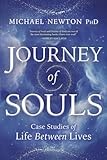
Journey of Souls: Case Studies of Life Between Lives
Michael Newton, Ph.D.
★★★★★ (4,800+ reviews) · $13.99
Newton’s landmark work — 29 case studies of people under hypnosis recounting their experiences between lives. The book that launched the field of Life Between Lives research.

Destiny of Souls: New Case Studies of Life Between Lives
Michael Newton, Ph.D.
★★★★★ (4,200+ reviews) · $11.50
The sequel to Journey of Souls — 67 new cases exploring soul groups, life planning, the Council of Elders, and soul advancement levels in the spirit world.

Life Between Lives: Hypnotherapy for Spiritual Regression
Michael Newton, Ph.D.
★★★★★ (900+ reviews) · $13.36
The professional guide to Newton’s LBL hypnotherapy method — used by certified practitioners worldwide to help clients explore their soul’s journey between incarnations.
Related Articles
- Healing a Soul Mate Relationship Through Past Life Regression
- Alien Past Life Regression: The Soul Beyond Earth
- Blocked Life Purpose? Past Life Regression May Help
- Fear of Hell and Past Life Regression: What LBL Shows
- Finding Laura: Past Life Regression and Lost Identity
- Finding the Courage to Change: A Past Life Regression Story
- Free Will and Past Life Regression: Moving Past Regret
- Love as a Catalyst for Change: Soul Contracts & Past Life Regression
- Suicide Loss and Past Life Regression: Finding Meaning in Grief
- Healing Phobias Through Past Life Regression: Case Studies
Have a question about this topic?
Answer based on this article