The council of elders in past life regression — the assembly of senior spirit guides who review a soul’s progress between lives — is described with striking consistency across Newton’s thousands of sessions. This story from Memories of the Afterlife captures what one woman found when she finally encountered them: not the judgment she had braced for, but a quality of attention so complete and so free of condemnation that it rearranged her understanding of what accountability actually means.
What she encountered was nothing like that. And the distance between what she expected and what she found turned out to be the most important thing she took from the session.
This first-person account, documented in Memories of the Afterlife (2009) by a certified therapist from The Newton Institute, offers one of the most detailed recorded descriptions of a client’s experience with the Council of Elders — the body of highly advanced souls that, across dozens of LBL accounts using Newton’s method, appears in the between-life experience as a source of review, guidance, and profound acceptance.
Approaching Something Ancient
The client recalled under LBL hypnosis that the Council of Elders did not announce itself. There was no dramatic reveal. Instead, she experienced a gradual intensification of what she described as weight — not physical weight, but the weight of significance. A quality of presence that had its own gravity.
She found herself in what she could only describe as a space that was both intimate and vast — a perceptual paradox that many LBL clients report and that seems to be a feature of how consciousness operates in the between-life state. The space felt designed for her, like a room sized to her specific soul. And yet it also felt enormous, ancient, and inhabited by something that extended far beyond her comprehension.
According to Newton’s method, the Council of Elders is typically encountered by souls during a review that takes place after returning to the spirit world. Not every soul meets the council in every between-life period; the degree of involvement seems to correspond to the complexity of the life just lived and the significance of the choices under review. Across Newton’s documented cases, council members are consistently described as radiating warmth without sentimentality — a quality of regard that sees clearly and loves completely, without confusing these two things.
The therapist reported that as this client approached what she understood to be the council, her physical body in the therapy room became visibly still. Not the stillness of sleep, but the stillness of deep attention.
What the Review Actually Felt Like
The client recalled under LBL hypnosis that the review did not proceed as she had expected. There was no list of wrongs. There was no account of what she should have done differently. Instead, what she experienced was something she struggled to name precisely — a quality of being seen that was unlike anything she had experienced in her physical life.
«It wasn’t that they told me things about myself,» she said. «It was that they already knew everything, and they were not disturbed by any of it.»
This is a consistent feature of council encounters across Newton’s documented cases. The council does not discover what a soul has done during its life. It already knows. The review is not information-gathering. It is a process of integration — helping the soul move from the partial, subjective perspective of a single lifetime into the broader view of the soul’s longer arc.
According to Newton’s method, the council’s primary concern is not whether a soul behaved correctly in human terms. It is whether the soul grew. Whether the difficult experiences it chose — and the choices it made in response to them — advanced its development in the directions it had intended. A soul can live a conventionally flawed life and be regarded with complete warmth by the council, because the council is reading a longer story than one lifetime tells.
The client recalled under LBL hypnosis one moment that she returned to repeatedly in describing the session: a point at which she felt the council’s attention settle on something she had spent decades considering her greatest failure. She waited for the response she had always feared — disappointment, reproach, confirmation of what she had always suspected about herself.
What arrived instead was a quality of regard she could only describe as recognition. They knew that moment. They had known it would happen. And they were interested in it not as a failure but as a turning point — one of the hinge events of her life that her soul had identified, in pre-birth planning, as potentially transformative. Whether she had extracted the full transformation from it was the question under review. She had not, entirely. But she had extracted more than she knew.
Guidance, Not Verdict
The therapist reported that what most surprised the client about the council encounter was its collaborative quality. She had expected to receive a verdict. Instead, she found herself in something closer to a conversation — an exchange in which the council’s understanding of her life was offered not as correction but as perspective, and in which her own soul’s understanding was actively invited.
This collaborative quality appears consistently in LBL accounts of council meetings and represents one of the most significant departures from conventional religious frameworks of divine judgment. According to Newton’s method, the between-life review is not a court. It is closer to a mentorship session in which the mentor has seen your work, understands its context completely, and is interested in helping you understand it too.
The council, she reported, was particularly interested in a pattern they named with a precision that startled her: a recurring tendency to abandon her own perspective at the precise moment when asserting it would have mattered most. This was not a moral failing in the ordinary sense. It was a soul-level habit — something she had brought across multiple lifetimes and had not yet fully resolved. They were not asking her to feel bad about it. They were asking her to see it clearly enough to work with it in whatever life came next.
The client recalled under LBL hypnosis the quality of the council’s interest in this pattern: something between patience and urgency. Patient in the way that eternity is patient. Urgent in the way that love is urgent — not because there is a deadline, but because the person in front of you matters.
What She Learned About Herself from Ancient Eyes
One of the most disorienting aspects of the council encounter, the client reported, was the temporal scale on which they were reading her. They were not reviewing her current life in isolation. They were reviewing it in the context of many lives — a span of experience so long that the current lifetime, with all its felt urgency and drama, appeared from their perspective as something she might describe as a recent chapter.
This reframe had a paradoxical effect: it both reduced and expanded the significance of what she had experienced. Reduced, in the sense that the specific failures and regrets she had carried felt less catastrophic against the backdrop of a much longer learning curve. Expanded, in the sense that she became aware of depths to her own soul that she had never considered — capacities being developed, themes being refined, across a timescale that made the concept of a single lifetime feel both small and profoundly meaningful.
According to Newton’s method, the council meeting typically closes with what clients describe as an infusion of energy or understanding — not information that can be easily translated into language, but a quality of knowing that the soul carries back into the between-life state and eventually into the next incarnation. It is less like receiving answers than like having one’s capacity for understanding enlarged.
Coming Back Changed
The therapist reported that the client emerged from the session in a state she described as quiet. Not peaceful in a detached way — she was not floating. She was, if anything, more present than she had been when she arrived: more specific in her attention, more located in her body, more aware of the exact life she was living.
The council had not resolved her questions. It had reoriented her toward them. The choices she had second-guessed looked different now — not vindicated, not condemned, but situated. They were part of a longer story that she had only been reading from the middle.
What she had been bracing for was judgment. What she had found was something that made judgment feel like a very small idea about a very large thing.
She was, she said, still processing. She expected to be for some time. That, too, felt like the right answer.
This story was uncovered through LBL therapy. Ready to explore your own? Find a certified therapist →
Related Articles
- The Council of Elders: Michael Newton on the Wise Beings Between Lives
- Council of Elders: Michael Newton’s Destiny of Souls
- Animal Souls and Past Lives: What a Goose Revealed
- Soul Mate Contracts: When Love Breaks You Open
- Violent Past Lives: How Karma Heals a Warrior Soul
Disclosure: As an Amazon Associate, Reincarnatiopedia earns from qualifying purchases. This helps support our research and publishing at no extra cost to you.
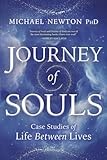
Journey of Souls: Case Studies of Life Between Lives
Michael Newton, Ph.D.
★★★★★ (4,800+ reviews) · $13.99
Newton’s landmark work — 29 case studies of people under hypnosis recounting their experiences between lives. The book that launched the field of Life Between Lives research.
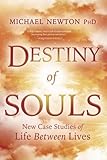
Destiny of Souls: New Case Studies of Life Between Lives
Michael Newton, Ph.D.
★★★★★ (4,200+ reviews) · $11.50
The sequel to Journey of Souls — 67 new cases exploring soul groups, life planning, the Council of Elders, and soul advancement levels in the spirit world.

Life Between Lives: Hypnotherapy for Spiritual Regression
Michael Newton, Ph.D.
★★★★★ (900+ reviews) · $13.36
The professional guide to Newton’s LBL hypnotherapy method — used by certified practitioners worldwide to help clients explore their soul’s journey between incarnations.
Related Articles
- The Council of Elders in Michael Newton’s LBL Work: Soul Guidance
- A Skeptic’s First LBL: Just a Couple Questions
- Council of Elders: Michael Newton’s Destiny of Souls
- Preparation for Rebirth: Council of Elders — Newton
- The Council of Elders: Michael Newton on the Wise Beings Between Lives
- Advanced Souls in the Spirit World: Newton\’s Research
- Alien Past Life Regression: The Soul Beyond Earth
- Beginner Souls & First Incarnation: Newton\’s Findings
- Children Who Die Young: Soul Contracts and Lessons from the Other Side
- Energy Healer Past Life: Souls Who Work With the Planet
Have a question about this topic?
Answer based on this article