Who Was Michael Newton?
Michael Newton (1931–2016) was an American counseling psychologist and hypnotherapist whose research into what he called the life between lives — the state of the soul between physical incarnations — earned him a unique place in the history of consciousness research. Working primarily in private practice in California, Newton spent more than four decades conducting deep hypnosis sessions with thousands of clients, accumulating what he described as a detailed, consistent map of the spirit world. His three major books — Journey of Souls (1994), Destiny of Souls (2001), and Life Between Lives (2004) — introduced his findings to a global audience and gave rise to a formal therapeutic discipline now practiced by certified therapists in dozens of countries.
Newton was not a spiritual teacher in the traditional sense. He began his career as a strict academic and self-described atheist, and his journey into the field of [life between lives] therapy was, in his own words, made «kicking and screaming.»
Early Life: Hollywood, Skepticism, and the Search for Meaning
Newton was born in Hollywood, California, in the 1930s and grew up in a community he credited with nurturing open inquiry. «I loved growing up in Southern California in those early days,» he recalled in one interview. «It was a very eclectic community and one in which ideas could soar, not being restricted by religious conventions or anything really that would inhibit someone who was a free spirit.»
As a young man, Newton attended a strict Episcopal prep school in Los Angeles, an experience that crystallized his early rejection of organized religion. He went on to study counseling psychology and eventually specialized in hypnotherapy. Throughout his twenties and thirties, Newton traveled widely — including time spent at a Buddhist monastery in northern Thailand — searching, as he put it, for answers to the fundamental questions of human existence: who we are, why we are here, and where we are going. He found none of his answers satisfying until an accidental discovery in his own consulting room forced a radical revision of everything he thought he knew.
The Two Cases That Changed Everything
Newton’s transformation began with a male client who complained of chronic, unexplained pain in his side. Medical examinations had yielded nothing. Newton took him into hypnosis to explore childhood trauma, again without result. In frustration, he gave a simple instruction: «Go to the source of your pain. Tell me the first time it happened.»
The client, an exceptionally deep hypnosis subject, did not surface a childhood memory. Instead, he found himself on the battlefields of France during the First World War — specifically at the Battle of the Somme on July 1st, 1916 — dying from a bayonet wound. Newton, a self-described amateur historian, immediately began cross-examining the client on his regiment, division patch, and the details of the battle. «I’m so skeptical because that’s my nature,» Newton later said. «I’m asking him to describe his division patch for me on his arm, what battle is this, where are we, who are you fighting.» The answers were historically accurate. Newton subsequently verified the details with the British War Office and the Imperial War Museum in London. The client’s pain resolved completely after the session.
The second pivotal case involved a woman suffering from profound loneliness and suicidal ideation. Standard therapy produced nothing useful. Newton again asked her to go to the source — to the place and time when she had last been with the companions she was missing. The woman, another deeply somnambulistic subject, described finding herself not in a past life but in the spirit world, surrounded by eight beings she identified as her «spiritual soulmates.» «There were just chills went up and down my spine,» Newton recalled. «I was talking to someone who was talking about a life between lives — and this is an area of which I had no experience and I’d read no books on.»
That session, Newton said, was the moment the door opened. From that point forward, the life between lives became the central focus of his research.
Decades of Research and the Consistency Problem
What followed was more than two decades of largely solitary work. Newton deliberately avoided metaphysical conferences and hypnosis conventions, unwilling to have his findings contaminated by others’ interpretations. «I worked for years kind of by myself,» he said. «I felt I had to do it alone. I didn’t want to be biased by their opinions.»
By the time he retired from active practice in Northern California and began writing, Newton had accumulated close to 7,000 cases. The feature of his data that he found most compelling was its consistency across clients of every background — religious and atheist, young and old, highly educated and not. «It didn’t matter whether someone came to me who was deeply religious or an atheist or any philosophical persuasion in between,» he noted. «Once I had them in deep hypnosis, they all told me the same thing about the spirit world and about their life between lives.»
Newton was careful to attribute this consistency not to suggestion on his part, but to open-ended questioning. «I ask people, what do you see — not, do you see so-and-so,» he explained. «So that regardless of how many cases have gone before the client I’m working with now, the material seems fresh to them.»
The Books and the Newton Institute
Newton published Journey of Souls in 1994. Described by the author as «kind of like a play» in which a soul passes through the spirit world step by step, the book introduced general readers to the key concepts of his research: the immediate post-death experience, [soul groups], spirit guides, the [Council of Elders], and the process of choosing a new body before rebirth. It became an international bestseller and remains one of the most widely read books in its category.
Destiny of Souls (2001) added significantly more case detail, addressing questions his audiences repeatedly pressed him on — including how souls who have crossed over attempt to make contact with grieving loved ones still on Earth. Life Between Lives (2004), his third book, served a different purpose: it was aimed at hypnotherapists, providing a methodological framework for conducting LBL sessions and training others to replicate his approach.
In 2001, Newton founded what he initially called the Society for Spiritual Regression, later renamed the Newton Institute by his colleagues over his own objections. «I really voted against it but I was outvoted,» he admitted with characteristic self-deprecation. The Institute trains certified LBL therapists in week-long intensive programs and today has graduates practicing in numerous countries. Newton himself taught that good facilitators required, above all, genuine curiosity, ethical commitment, and the patience to work in three-to-four-hour sessions without leading the client.
From Atheism to Spirituality
Perhaps the most striking dimension of Newton’s story is the personal transformation it documents. A man who began his career dismissing any notion of an afterlife ended it describing a «source» of all intelligence that souls are ultimately progressing toward. «I came into this as an atheist,» he said plainly. «I did not believe in God. I did not believe that there was anything after life but ultimate oblivion. And my clients kind of brought me to this kicking and screaming.» He was careful, however, not to frame this in religious terms: «I’m not a religious person, but I hope I’m spiritual.»
Newton described his role modestly. «I consider myself basically a messenger and that’s it,» he said in one of his final interviews. «I’m very very grateful» for the access his clients gave him to what he regarded as a hidden dimension of human experience.
Conclusion: A Legacy in Life Between Lives Research
According to Newton’s model, the findings he assembled over decades point toward a coherent architecture of the soul’s journey — from death through the spirit world, through [soul group] reunions and review before a [Council of Elders], through the selection of a new body, and back into physical life. Whether evaluated as literal cartography or as a rich symbolic framework emerging from the deepest layers of the human psyche, his work has proven extraordinarily influential. It gave millions a new vocabulary for discussing consciousness after death and established LBL therapy as a distinct practice.
Newton died in 2016. The Newton Institute he reluctantly allowed to bear his name continues his work. His books remain in print in dozens of languages.
Note: The findings described in this article reflect Michael Newton’s own accounts of his research. They represent one perspective within the broader field of consciousness studies and are not presented here as established scientific fact.
See Also
- [Life Between Lives Therapy]
- [Soul Groups: Michael Newton’s Research]
- [What Happens to the Soul at the Moment of Death]
- [The Council of Elders]
- [Brian Weiss and the Case of Catherine]
Related Articles
- The Spirit World: Michael Newton Map of the Afterlife
- What Happens to the Soul at the Moment of Death: Michael Newton’s Cases
- The Council of Elders: Michael Newton on the Wise Beings Between Lives
- Spirit Guides in Michael Newton Research: Who They Are and What They Do
- Soul Groups Explained: Primary Clusters and Soul Colors
📖 Recommended Book
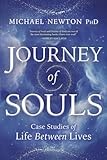
Journey of Souls: Case Studies of Life Between Lives
Michael Newton, Ph.D.
★★★★★ (4,800+ reviews) · $13.99
Newton’s landmark work — 29 case studies of people under hypnosis recounting their experiences between lives. The book that launched the field of Life Between Lives research.
Related Articles
- What Happens to the Soul at the Moment of Death: Michael Newton’s Cases
- Spirit Guides in the Afterlife: Michael Newton’s Research on Soul Guidance
- The Spirit World: Michael Newton Map of the Afterlife
- Destiny of Souls by Michael Newton: A Guide to the Spirit World
- Michael Newton: The Visionary Behind Life Between Lives Hypnotherapy
- Souls Comforting the Grieving: Michael Newton’s Research
- Spirit Guides in Michael Newton Research: Who They Are and What They Do
- The Council of Elders in Michael Newton’s LBL Work: Soul Guidance
- The Council of Elders: Michael Newton on the Wise Beings Between Lives
- The Michael Newton Institute: History, Training, and Legacy
Have a question about this topic?
Answer based on this article