The Bardo Thödol (Tibetan Book of the Dead) and Modern LBL
The Bardo Thödol, commonly known in the West as the Tibetan Book of the Dead, is an ancient Buddhist text detailing the stages of consciousness after death and before rebirth. In parallel, modern Life Between Lives (LBL) regression therapy, pioneered by researchers like Dr. Michael Newton, uses hypnosis to explore the non-physical realm where souls reportedly reside between incarnations. This article examines the striking convergences and distinct differences between these two maps of the afterlife—one rooted in centuries-old spiritual tradition and the other in contemporary clinical exploration of the spirit world.
Historical and Philosophical Foundations of the Bardo Thödol
Attributed to the 8th-century master Padmasambhava and hidden as a terma (treasure text) for later discovery, the Bardo Thödol is a guide to be read aloud to a deceased individual during the 49-day period following death. This period is called the bardo (Tibetan for «intermediate state»). The text’s primary purpose is to guide the consciousness, or mind-stream, through a series of visions and realms toward liberation from the cycle of rebirth (samsara) or, failing that, toward a favorable rebirth. Its teachings are deeply embedded in Vajrayana Buddhist cosmology, psychology, and the doctrine of karma.
The bardo is not a single place but a progression of stages. The most relevant to this comparison is the Sidpa Bardo, the bardo of becoming, where the consciousness, driven by karma and attachment, experiences visions that propel it toward reincarnation. The text describes the consciousness encountering peaceful and wrathful deities, which are understood as projections of its own mind, and ultimately being drawn toward the light of a future womb based on its past actions and desires.
The Emergence of Life Between Lives (LBL) Research
Modern investigation into the intermission between earthly lives began with the work of hypnotherapists exploring past life regression. In the 1960s and 1970s, researchers like Dr. Helen Wambach collected statistical data on past-life recall. However, it was Dr. Michael Newton who systematically mapped the spirit world between incarnations. Beginning in the late 1960s, Newton discovered that under deep hypnosis, subjects could consistently describe a state of existence after the death experience and before the next birth.
Through thousands of case studies, Newton detailed a structured afterlife environment. Subjects reported returning to a spirit home, reuniting with soul groups and guides, reviewing their past life, planning future incarnations with the help of a council of elders, and engaging in continuous learning. His methodology, while controversial within mainstream science, presented a clinical, evidence-based approach to mapping the non-physical realm, published in seminal works like Journey of Souls (1994) and Destiny of Souls (2000).
Comparative Analysis: Convergences and Divergences
While separated by culture, time, and methodology, the Bardo Thödol and modern LBL reports offer a fascinating dialogue on the architecture of the afterlife.
Structural Similarities in the Journey
Both systems describe a structured, non-linear process for the discarnate soul:
- Transition and Orientation: Both describe an initial period of disorientation or «sleep» after death, followed by a growing awareness of a new environment. The Bardo’s Chikhai Bardo (moment of death) and the LBL report of floating away from the body and being met by guides are functionally similar first steps.
- The Life Review and Judgment: A core feature in LBL accounts is the detailed life review, often conducted with the help of guides or a council. The Bardo Thödol describes the «Mirror of Karma,» in which all the deceased’s good and bad actions are vividly reflected, producing feelings of joy or shame based on their conduct. In both, the process is presented not as punishment but as a learning mechanism.
- Preparation for Rebirth: Both frameworks involve conscious preparation for the next incarnation. In the Bardo, the consciousness is urged to choose a rebirth wisely, avoiding unfavorable wombs driven by attraction or aversion. In LBL, souls describe meticulously planning their next life’s challenges, relationships, and lessons with their soul group and guides, selecting parents and key life circumstances.
Fundamental Philosophical Divergences
The differences between the two models are profound and stem from their underlying worldviews:
- Purpose and Goal: The ultimate goal of the Bardo Thödol is liberation—to recognize the illusory nature of all bardo visions and achieve nirvana, thereby escaping the cycle of rebirth entirely. In contrast, Newtonian LBL sees the cycle of rebirth as a positive school for soul growth, with the «home world» as a permanent base. The goal is evolution, not escape.
- Nature of the Afterlife Beings: The deities and lights encountered in the Bardo are explicitly described as emanations of one’s own mind. In LBL accounts, spirit guides, council members, and soul mates are described as distinct, individual beings with their own personalities and histories, though connected by bonds of love.
- Agency and Fear: The tone of the Bardo Thödol is urgent and cautionary, warning of terrifying visions that can lead to a poor rebirth if misunderstood. The LBL narrative, as reported by Newton’s subjects, is generally one of love, welcome, and purposeful planning, with less emphasis on fear-inducing hallucinations.
Integration and Perspectives in Modern Research
Later researchers have built upon and sometimes diverged from Newton’s model. For instance, hypnotherapist Dr. Brian Weiss, known for his work with past life regression, also reports clients accessing between-life states, often emphasizing healing messages from spirit guides. Other practitioners note cultural and religious influences in their clients’ LBL narratives, suggesting the subjective mind may use familiar symbols—a point that echoes the Bardo’s emphasis on mental projection.
From a scholarly perspective, the parallels are often interpreted through psychological or transcendental lenses. Some transpersonal psychologists see both systems as maps of the deep unconscious, with the bardo states representing archetypal psychological processes. Others in the field of afterlife studies posit that the consistencies in LBL reports across cultures and belief systems, much like the near-death experience (NDE), point to a possible objective reality of the spirit world.
The Role of Consciousness and Interpretation
A critical point of analysis is the role of consciousness itself. The Bardo Thödol is explicit: everything perceived is a manifestation of mental habit (karma). Modern researchers like Tom Campbell, a physicist working in consciousness studies, propose a model where reality is a virtual simulation, and the afterlife is a state of consciousness with rules shaped by belief and expectation. This bridges the two views: the LBL environment may be a consistent, real subjective space shaped by the soul’s level of understanding, not unlike the Buddhist view.
Conclusion: Complementary Maps of the Unseen
The Bardo Thödol and modern Life Between Lives research represent two powerful attempts to chart the territory of death and what may lie beyond. One is a prescriptive, spiritual guide aimed at liberation, born from enlightened insight. The other is a descriptive, therapeutic model built from aggregated subjective experience, aimed at understanding and healing. Their convergences—the life review, the guidance, the choice in rebirth—are remarkable and suggest a possible common underlying experience of the post-mortem state. Their divergences highlight the fundamental influence of cultural and philosophical context on how this ultimate journey is interpreted and navigated. Together, they offer humanity a richer, more nuanced set of navigational tools for contemplating the greatest mystery: the nature of existence between lives.
See Also
- Michael Newton and the Newton Institute Methodology
- Past Life Regression Therapy and Case Studies
- The Near-Death Experience (NDE) and Its Aftermath
- Cross-Cultural Perspectives on the Afterlife
- Soul Groups and Spiritual Contracts in Reincarnation
Related Articles
- The Akashic Records: Accessing the Book of Life
- Life Between Lives Therapy: What to Expect in an LBL Session
- Jim Tucker’s Book *Life Before Life: Children’s Memories of Previous Lives
- Ian Stevenson’s Book *Twenty Cases Suggestive of Reincarnation
Disclosure: As an Amazon Associate, Reincarnatiopedia earns from qualifying purchases. This helps support our research and publishing at no extra cost to you.
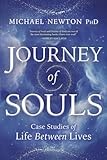
Journey of Souls: Case Studies of Life Between Lives
Michael Newton, Ph.D.
★★★★★ (4,800+ reviews) · $13.99
Newton’s landmark work — 29 case studies of people under hypnosis recounting their experiences between lives. The book that launched the field of Life Between Lives research.
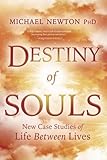
Destiny of Souls: New Case Studies of Life Between Lives
Michael Newton, Ph.D.
★★★★★ (4,200+ reviews) · $11.50
The sequel to Journey of Souls — 67 new cases exploring soul groups, life planning, the Council of Elders, and soul advancement levels in the spirit world.

Life Between Lives: Hypnotherapy for Spiritual Regression
Michael Newton, Ph.D.
★★★★★ (900+ reviews) · $13.36
The professional guide to Newton’s LBL hypnotherapy method — used by certified practitioners worldwide to help clients explore their soul’s journey between incarnations.
Related Articles
- The Connection Between Karma and Modern Psychology
- Soul Levels and Spiritual Evolution: The Michael Teachings
- The Akashic Records and Soul Contract Review
- The Akashic Records: Accessing the Book of Life
- The Council of Elders in Michael Newton’s LBL Work: Soul Guidance
- The Tunnel of Light in Near-Death and After-Death Experiences
- The Two Layers of Fear: Present-Moment and Soul Memory
- Animal Souls in the Afterlife: Do Pets Reincarnate?
Have a question about this topic?
Answer based on this article