The Council of Elders: Michael Newton on the Wise Beings Between Lives
In the field of life between lives (LBL) research, the concept of the Council of Elders stands as one of the most profound and frequently reported structures described by individuals under deep hypnosis. This phenomenon was extensively documented by pioneering hypnotherapist Dr. Michael Newton through his clinical work in past life regression and subsequent exploration of the spiritual realm experienced after physical death and before the next incarnation. According to Newton’s findings, the Council is a group of advanced, compassionate spiritual beings who assist a soul in reviewing its past life, understanding its lessons, and planning its future evolutionary path.
Michael Newton and the Discovery of the Interlife
Michael Newton (1931-2016) was a certified Master Hypnotherapist and a Ph.D. in Counseling Psychology. Initially skeptical of past life regression, his work took a decisive turn in the late 1960s when a client unexpectedly and spontaneously entered a state between physical incarnations during a session. This event led Newton to develop specialized techniques to reliably guide subjects into what he termed the «interlife» or spiritual home. Over three decades, he conducted thousands of case studies, which formed the empirical basis for his two seminal books, Journey of Souls: Case Studies of Life Between Lives (1994) and Destiny of Souls: New Case Studies of Life Between Lives (2000). It is within this consistent, cross-cultural narrative from hundreds of subjects that the description of the Council of Elders emerges.
Description and Function of the Council
According to Newton’s case data, the Council is not a singular, universal entity but rather a personal or soul-group-specific panel that a soul encounters after initial debriefing with its primary spirit guide and soul cluster. The Council’s primary function is benevolent, educational, and non-judgmental, focused entirely on the soul’s growth.
Composition and Appearance
Subjects typically describe between three and twelve beings, though the number often reported is six or seven. These Elders are perceived as radiant beings of light, often without specific gender, though a soul may project a familiar form onto them (e.g., wise men or women). Their energy is consistently described as immensely loving, intelligent, and authoritative, yet devoid of any wrath or punitive intent. Many report a «presiding» Elder who acts as the primary communicator. Importantly, Newton’s subjects did not identify these beings as religious figures like saints or deities, but as ascended master souls who have completed their own cycles of incarnation.
The Council Review Process
The encounter with the Council of Elders is typically structured as a review and planning session, which Newton categorized into several key phases:
- Life Review Amplification: The soul revisits key events from its recent past life, but with the Council providing deeper context. They help the soul understand not only its actions but the underlying intentions, the effects on others, and the karmic patterns carried over from other lives.
- Non-Judgmental Evaluation: The Council asks probing, Socratic-style questions to encourage self-assessment. The soul judges itself, often feeling the emotions of those it affected, while the Elders provide unconditional support and clarity.
- Assessment of Life Lessons: The Elders help the soul determine which lessons were mastered, which were partially learned, and which were avoided. This assessment is framed in terms of soul development, such as cultivating patience, overcoming fear, or expressing compassion.
- Planning the Next Incarnation: This is a collaborative discussion. Based on the soul’s level of development and unresolved karma, the Council suggests potential life paths, challenges, relationships, and even physical conditions that would offer the optimal environment for growth. The soul retains its free will to accept, modify, or decline these suggestions.
Research Consistency and Evidentiary Considerations
Newton’s methodology involved careful screening of subjects, verbatim transcript recording, and cross-comparison of narratives. The consistency of reports across individuals of diverse cultural and religious backgrounds—who were not in contact with each other—constituted his primary evidence. Key consistencies include the Council’s non-judgmental nature, its focus on learning, the use of light and telepathic communication, and the structure of the review. Critics from the scientific community often attribute these narratives to cryptomnesia (hidden memories), cultural absorption, or the hypnotist’s unconscious leading. Newton countered that his technique was non-directive, asking open-ended questions like «What is happening now?» and that the elaborate, consistent details reported went far beyond any known religious doctrine.
Perspectives from Other Researchers
While Michael Newton provided the most detailed map of the interlife, other researchers have documented similar phenomena:
- Helen Wambach, in her large-scale regression studies, found subjects reporting «wise beings» or «guides» who helped plan lives, though her work focused more on the incarnation choice process itself.
- Dr. Joel Whitton and Joe Fisher, in Life Between Life (1986), described a «Panel of Judges» experienced by their subjects, which shares functional similarities with Newton’s Council, though sometimes perceived with more solemnity.
- Dr. Brian L. Weiss, a prominent past-life regression psychiatrist, also reports patients encountering wise, loving beings in the between-state who offer guidance, though his reports are less structurally detailed than Newton’s.
- Traditional Theosophical and Spiritualist literature describes «Lords of Karma» or «Masters of Wisdom,» which are conceptually similar but often presented within a more hierarchical cosmological framework.
The major divergence in perspectives often lies in the tone and nomenclature. Newton insisted his subjects never felt «judged» in a punitive sense, whereas other traditions may use the term «judgment» more literally. The common thread across most afterlife studies reporting such structures is the presence of wiser, disincarnate entities facilitating soul evolution.
Significance in Soul Evolution
Within Newton’s model, the Council of Elders is a cornerstone of purposeful reincarnation. It frames physical life not as a random event but as a curated educational experience. The Council meeting represents a pivotal point where the soul integrates past experiences and consciously participates in designing its future challenges. This concept provides a framework for understanding life’s difficulties as potentially self-chosen for growth, and reinforces the ideas of personal responsibility and karmic learning. It places the ultimate agency for spiritual development on the soul itself, with the Council acting as supremely knowledgeable and compassionate advisors.
Conclusion
The Council of Elders, as documented by Michael Newton, remains a compelling and detailed feature of the modern life between lives narrative. While not verifiable by conventional physical science, its persistent appearance in the independent reports of hundreds of individuals under hypnosis offers a consistent and complex model for what may occur in the non-physical state between incarnations. It represents a synthesis of ideas from ancient esoteric traditions with contemporary hypnotic exploration, emphasizing soul evolution, self-assessment, and loving guidance. For many, it provides a meaningful cosmology that contextualizes human struggle and purpose within a larger framework of spiritual education.
See Also
- Michael Newton and the Newton Institute Methodology
- Life Between Lives (LBL) Hypnotherapy
- Spirit Guides and Soul Groups in Afterlife Studies
- Karma and Reincarnation: The Mechanics of Soul Learning
- Past Life Regression Research and Evidence
Related Articles
- Michael Newton and Life Between Lives
- What Happens to the Soul at the Moment of Death: Michael Newton’s Cases
- The Spirit World: Michael Newton Map of the Afterlife
- Spirit Guides in Michael Newton Research: Who They Are and What They Do
- Soul Groups Explained: Primary Clusters and Soul Colors
Disclosure: As an Amazon Associate, Reincarnatiopedia earns from qualifying purchases. This helps support our research and publishing at no extra cost to you.
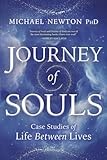
Journey of Souls: Case Studies of Life Between Lives
Michael Newton, Ph.D.
★★★★★ (4,800+ reviews) · $13.99
Newton’s landmark work — 29 case studies of people under hypnosis recounting their experiences between lives. The book that launched the field of Life Between Lives research.
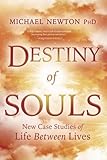
Destiny of Souls: New Case Studies of Life Between Lives
Michael Newton, Ph.D.
★★★★★ (4,200+ reviews) · $11.50
The sequel to Journey of Souls — 67 new cases exploring soul groups, life planning, the Council of Elders, and soul advancement levels in the spirit world.

Life Between Lives: Hypnotherapy for Spiritual Regression
Michael Newton, Ph.D.
★★★★★ (900+ reviews) · $13.36
The professional guide to Newton’s LBL hypnotherapy method — used by certified practitioners worldwide to help clients explore their soul’s journey between incarnations.
Related Articles
- Michael Newton: The Visionary Behind Life Between Lives Hypnotherapy
- The Council of Elders in Michael Newton’s LBL Work: Soul Guidance
- Michael Newton: Pioneer of Life Between Lives Hypnotherapy & Soul Research
- Destiny of Souls by Michael Newton: A Guide to the Spirit World
- Spirit Guides in the Afterlife: Michael Newton’s Research on Soul Guidance
- The Spirit World: Michael Newton Map of the Afterlife
- Unveiling the Spirit World: A Review of Michael Newton’s Destiny of Souls
- Council of Elders: Michael Newton’s Destiny of Souls
- Michael Newton and Life Between Lives
- Soul Energy Restoration Between Lives: Michael Newton
Have a question about this topic?
Answer based on this article