What are soul group systems Michael Newton described in his between-lives regression research? Soul group systems Michael Newton documented across hundreds of hypnotic sessions reveal that souls travel through eternity in organized communities — persistent groups that incarnate together across many lifetimes, playing different roles in each other’s stories while always returning to the same essential family between lives. That inexplicable sense of already knowing someone may be exactly what it feels like.
Soul Group Systems: The Communities We Return To Between Lives
Have you ever met someone for the first time and felt, inexplicably, that you have always known them? Not the ordinary sense of ease that comes with compatible personalities, but something deeper — a recognition, almost a relief, as if a part of you that has been waiting finally got to relax. Many people have this experience and chalk it up to chemistry, or projection, or the pleasant fiction of a romantic mind.
What if it were memory?
Michael Newton‘s regression research offers a framework for this feeling that is, once encountered, difficult to entirely set aside. According to the between-lives accounts his clients described across hundreds of hypnotic sessions, souls do not travel through eternity alone. They move in groups — organized, persistent communities of souls that incarnate together across many lifetimes, playing different roles in each other’s stories, but always returning, between lives, to the same essential community.
How Soul Groups Are Organized
The soul group structure Newton’s subjects described is neither rigid hierarchy nor formless collective. It is something more like an extended family — with all the warmth, complexity, and intimacy that implies. Groups typically range from a handful of souls to a few dozen, though the precise size varies. What they share is a period of learning and development together: they are at comparable stages of soul evolution, working on similar kinds of lessons, and the group itself functions as a kind of school as much as a family.
Each group, according to Newton’s research, has a primary guide — a more advanced soul who oversees the group’s development without directing it, who is available for counsel and who observes each member’s progress with deep personal interest. This guide is not a teacher in the didactic sense; the relationship is closer to a mentor or a beloved elder who has traveled further along the same path.
What Newton’s subjects described about the internal life of these groups is touching in its specificity. There is genuine affection — the kind that comes from long shared history, from having faced hard things together, from knowing someone across multiple lifetimes and multiple roles. The soul you were in love with in one life might be your sibling in the next, your rival in the one after that. The roles change; the underlying relationship, the underlying recognition, persists.
Colors, Sounds, and Energy Signatures
One of the more unusual details that emerged from Newton’s regression research is the way soul groups are described in terms of color and sound. Newton’s subjects frequently described individual souls — and soul groups — as having distinctive energetic qualities that manifest as color or vibrational tone. These are not metaphors or poetic glosses; the clients described them as genuine perceptual realities in the spirit world.
A soul group might be associated with a particular color frequency — not a simple hue like «blue» but a quality of light that carries specific information about that group’s developmental stage and characteristic qualities. Individual souls within the group have their own color signatures, which shift over time as they grow and develop. A soul’s color after a challenging, growth-filled lifetime might be richer, deeper, or more complex than it was before.
Sounds function similarly. The spirit world, as Newton’s clients described it, is not silent — it is suffused with what they could only approximate in human terms as music or tone, and these tones are meaningful. A group’s characteristic sound is part of its identity. Newton’s subjects described being able to recognize their soul group not just by sight but by a kind of resonance — a feeling, before they had even found the group visually, that they were close to home.
Learning Centers and the Work of Soul Groups
Beyond the emotional life of the group, Newton’s research subjects described the spirit world as containing elaborate learning centers — spaces dedicated to specific kinds of education, practice, and development. Soul groups use these centers together, working on the particular lessons their stage of development requires.
The learning isn’t purely intellectual, though there are elements of that. Newton’s subjects described reviewing past-life experiences with their group, examining choices and their consequences with a clarity unavailable from within the life itself. They described practicing skills — not just human skills but capacities that might be better described as spiritual: the ability to manage energy, to influence environments, to communicate across dimensions, to work with younger souls who need guidance.
Each group’s learning curriculum, as it were, is shaped by their collective needs and the particular evolutionary path the group is on. Two groups at similar stages of development might be working on entirely different things — one focused on the complexity of emotional relationships, another on what Newton’s subjects described as more abstract capacities related to the group’s particular area of spiritual specialization.
The guides who work with these groups know their members intimately — not just their current development but their entire history across lifetimes. This depth of being known, for Newton’s subjects, was one of the most emotionally significant aspects of returning to the spirit world. To be truly, completely, without-any-performance known — and to be loved within that knowing — is perhaps the central gift of the soul group, as described in this research.
What This Means for Us
Newton’s soul group framework offers a quietly radical reinterpretation of our most significant relationships. The people who matter most to us — the ones who have shaped us most profoundly, for better and worse — may not be accidents of proximity or chemistry. They may be, by this account, our soul group: the community we have chosen to travel with across multiple lifetimes, who have agreed to play whatever role serves our mutual growth, regardless of how that looks from inside the story.
This doesn’t make difficult relationships easier to bear in any simple sense. A soul group member who has agreed to play the role of the parent who was never quite there, or the partner who broke your heart, or the friend who betrayed you — none of that is less painful because it may have been chosen. But it does reframe the meaning of it. In Newton’s framework, the most challenging relationships of a lifetime are often the ones with the most soul-history behind them. The intensity is not random.
What it suggests, at a practical level, is that the people you are drawn to most inexplicably — the ones who feel like home — deserve your full attention. That the feeling of already knowing someone may not be projection but recognition. That your community, your real community, might be older and deeper and more carefully assembled than you have imagined.
Ready to explore your own between-lives experience? Find a certified LBL therapist →
Related Articles
- Soul Community in Spirit World: Michael Newton’s Research
- Soul Energy Restoration Between Lives: Michael Newton
- What Happens to the Soul at the Moment of Death: Michael Newton’s Cases
- The Akashic Records and Soul Contract Review
- Soul Specialization: Healers, Teachers, and Warriors
Disclosure: As an Amazon Associate, Reincarnatiopedia earns from qualifying purchases. This helps support our research and publishing at no extra cost to you.
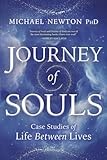
Journey of Souls: Case Studies of Life Between Lives
Michael Newton, Ph.D.
★★★★★ (4,800+ reviews) · $13.99
Newton’s landmark work — 29 case studies of people under hypnosis recounting their experiences between lives. The book that launched the field of Life Between Lives research.
Destiny of Souls: New Case Studies of Life Between Lives
Michael Newton, Ph.D.
★★★★★ (4,200+ reviews) · $11.50
The sequel to Journey of Souls — 67 new cases exploring soul groups, life planning, the Council of Elders, and soul advancement levels in the spirit world.

Life Between Lives: Hypnotherapy for Spiritual Regression
Michael Newton, Ph.D.
★★★★★ (900+ reviews) · $13.36
The professional guide to Newton’s LBL hypnotherapy method — used by certified practitioners worldwide to help clients explore their soul’s journey between incarnations.