The soul entering a new body at birth — as described by Michael Newton‘s regression subjects — is not the simple beginning it appears from the outside. The soul does not arrive all at once. Newton’s subjects described a gradual merging process: some presence in the womb, a period of divided attention between the spirit world and the physical, and then the closing of that door at or near the moment of birth. What looks like arrival is actually a long goodbye to everything the soul has just come from.
Newton’s subjects, regressed to their earliest memories of entering a new life, described an experience that is simultaneously tender and destabilizing — the soul meeting its new physical home for the first time, testing it, merging with it, beginning the long process of becoming fully human again.
The First Touch: When Soul Meets Body
The soul does not, according to Newton’s research, suddenly drop into a physical body at the moment of birth. The relationship between a soul and its intended body begins much earlier — and much more gently — than that.
Newton’s subjects described a gradual process of approach and integration, beginning while the fetus is still developing in the womb. The soul makes early, tentative contact — what several subjects described as brief visits, moments of connection with the forming physical vessel, followed by return to the fuller awareness of the spirit state. These early contacts are exploratory, not yet committed. The soul is learning the body’s developing patterns, its energetic signature, its emerging temperament.
The timing of deeper integration varies, according to Newton’s accounts. Most of his subjects described becoming more continuously present in their bodies in the later months of pregnancy, though the level of integration at birth itself ranged across accounts. Some described being fairly fully present at delivery. Others described the birth process as still involving a degree of coming and going — with more complete merging taking place in the days and weeks following birth.
The Experience of Fetal Entry: Sensation and Compression
When Newton’s subjects described the actual experience of entering a developing body — particularly the moments of deeper integration — the language they reached for was consistently physical, even visceral. This is striking, because the soul itself has no physical form. But the process of merging with a physical body is apparently experienced as deeply sensory.
The most common description was one of compression or constriction — a sense of infinite, fluid consciousness beginning to take on the boundaries of a physical form. Several subjects described it as moving from vastness into limitation, from the expansive openness of the spirit state into the specific, bounded experience of inhabiting a small body. Some found this deeply uncomfortable. Others described it as neutral, or even interesting. But the physical sensation of it — the density, the particularity — was something nearly all of Newton’s subjects noted.
There was also, frequently, an emotional quality to the early stages of embodiment. Newton’s subjects described picking up the emotional states present in the environment they were entering — the feelings of the mother, the atmosphere of the household, the relational dynamics already in place before the child arrived. Babies are not blank in this framework. They arrive already sensing, already registering the emotional texture of their new environment.
Birth from the Inside: What the Soul Experiences
The birth process itself — delivery — was described by Newton’s subjects in ways that are sometimes shocking in their specificity. The experience of moving through the birth canal, from the soul’s perspective, was consistently described as disorienting and intense. After the relative freedom of even partial spirit-state awareness, the physical reality of birth is a full-sensory immersion in density, pressure, and the shock of cold air.
Several subjects described the moment of first breath — from the inside — as one of the most jarring transitions in the entire incarnational process. The body suddenly becoming operational in a completely new way. Lungs filling. Sound arriving at full intensity. Light, even filtered through closed eyes, after the dark of the womb.
And then, for many: the first loss. The severance of the cord. The physical separation from the one source of continuity that has existed throughout the entire prenatal period. Newton’s subjects who described early infant memory often noted that the first experiences of the physical world carry a quality of both wonder and grief — the soul simultaneously beginning its new life and already missing something.
The Amnesia Deepens: Losing the Spirit World
Newton’s research describes birth as the point at which the amnesia that began before the soul’s entry becomes nearly complete. Prior to birth — and in some accounts, through early infancy — his subjects described retaining traces of between-life awareness. A sense of the spirit world. Glimpses of their guides. A vague but present feeling of the love and support that accompanied them to the threshold.
Infants, in Newton’s framework, are not simply small humans who know very little. They are souls in the early stages of forgetting — beings who have recently come from somewhere else and are gradually losing access to the memory of it. The quality of awareness that very young children sometimes display — that disconcerting sense of ancient knowingness that some babies carry in their eyes — may be, according to this account, exactly what it looks like: the residue of a larger awareness not yet fully obscured.
The complete forgetting, for most souls, sets in gradually over the first years of life. Language acquisition accelerates the process, as the structure of linear human language makes the non-linear awareness of the spirit world harder to hold. By the time most children are old enough to describe what they know, the between-life memories have largely dissolved — replaced by the immediate, absorbing, fully human experience of being a small person in a large world.
The New Body and the Soul’s Adaptation
After birth, the work of adaptation begins in earnest. The soul is now fully committed to its new physical vehicle — and the process of learning that vehicle, working with it, integrating its particular temperament and tendencies and limitations, is a task that unfolds across the entire life.
Newton’s subjects described this as a process that is never entirely seamless. Even souls with long incarnational experience arrive into a new body and face the work of learning it. The body has its own inclinations — its nervous system, its endocrine patterns, its genetic temperament — and the soul must learn to work within those inclinations, to use them, to be shaped by them. The relationship between soul and body, in Newton’s framework, is not one of the soul simply occupying a neutral vessel. It is a genuine relationship, with all the negotiation and adaptation that implies.
What makes this adaptation possible is the very amnesia that might initially seem like a disadvantage. A soul that remembered everything it had been would struggle to fully inhabit the particular perspective of this new life. The forgetting, however painful it sometimes seems, is what allows the soul to be genuinely here — not performing a role it remembers from above but actually living a life from the inside.
What This Means for Us
The birth narrative that Newton’s research describes is, in its way, one of the most generous accounts of human existence imaginable. You did not simply arrive in this life by accident, confused and alone. You came deliberately, supported, prepared — and you experienced the forgetting not as abandonment but as part of the agreement.
The experiences of very early life that many of us carry without words — the quality of our first environment, the emotional texture of our earliest relationships, the felt sense of our own arrival — may hold more information than we realize. Not memories we can access through normal means, but patterns that shaped us before language existed to describe them.
And there is something in Newton’s account of the early infant — that soul still warm from the spirit world, holding the last traces of between-life awareness in eyes that seem to know more than they should — that is worth sitting with. Every person you have ever known was once that. You were once that. Still carrying the ghost of everything you came from, standing at the very beginning of the long, necessary, entirely chosen process of becoming fully human.
The forgetting is the beginning. And you agreed to it, because you knew what it would make possible.
Related Articles
- Beginner Souls & First Incarnation: Newton\’s Findings
- Spirit Guides Between Lives: Michael Newton’s Research
- Soul Groups and Placement: Michael Newton’s Spirit World Map
- Soul Transition Between Lives: The Spirit World Staging Area
- Life Review After Death: Soul Orientation Without Punishment
Disclosure: As an Amazon Associate, Reincarnatiopedia earns from qualifying purchases. This helps support our research and publishing at no extra cost to you.
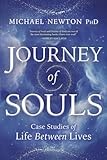
Journey of Souls: Case Studies of Life Between Lives
Michael Newton, Ph.D.
★★★★★ (4,800+ reviews) · $13.99
Newton’s landmark work — 29 case studies of people under hypnosis recounting their experiences between lives. The book that launched the field of Life Between Lives research.
Destiny of Souls: New Case Studies of Life Between Lives
Michael Newton, Ph.D.
★★★★★ (4,200+ reviews) · $11.50
The sequel to Journey of Souls — 67 new cases exploring soul groups, life planning, the Council of Elders, and soul advancement levels in the spirit world.

Life Between Lives: Hypnotherapy for Spiritual Regression
Michael Newton, Ph.D.
★★★★★ (900+ reviews) · $13.36
The professional guide to Newton’s LBL hypnotherapy method — used by certified practitioners worldwide to help clients explore their soul’s journey between incarnations.