The life review after death — the moment when a soul examines what it has just lived through, not with guilt but with clarity — is one of the most striking passages in Michael Newton‘s Journey of Souls. Subjects described it as seeing your life from the outside, without the distortions of ego or fear: understanding why you made the choices you did, and what they cost or gave to the people around you. Most found it less like judgment and more like finally understanding a story you had been living inside.
What if the actual life review — the one that happens after death, according to thousands of accounts collected by hypnotherapist Michael Newton — sounds nothing like that? What if the review is less a court and more a conversation? What if the first thing that happens when you arrive on the other side isn’t judgment, but healing?
The Healing Shower
Newton’s subjects described, with remarkable consistency, an early experience in the spirit world that many called a «healing shower» or «cleansing.» This was not a physical experience, of course — but subjects used physical language because no other vocabulary quite fit. What they described was a kind of energetic clearing: the accumulated emotional weight of the lifetime they had just completed being gently dissolved or washed away.
Some subjects described it as a bath of light. Others described it more atmospherically — a quality of the spirit world itself that began to dissolve grief, trauma, pain, and the particular heaviness of having lived a human life the moment the soul fully arrived. Newton observed that the intensity of this experience varied: souls who had lived through significant trauma or great suffering often described the healing as more intense and more prolonged, as though the depth of the clearing matched the depth of what needed to be cleared.
The healing shower wasn’t passive. Newton’s subjects described a quality of attention in it — as though the light or energy doing the clearing was aware of them specifically, responsive to what they carried. Several subjects described it as the most physically comfortable they had ever felt, which is paradoxical given that they no longer had physical bodies. What they seemed to mean was something like: this was the absence of all the discomfort they hadn’t realized they’d been carrying.
The Life Review
After the initial healing period — which varied in duration, though time in the spirit world operates differently than it does in physical life — Newton’s subjects described moving toward what he termed the orientation session: a review of the lifetime that had just concluded.
This is the part that most of us, culturally, have strong expectations about. We expect judgment. We expect a ledger with sins on one side and virtues on the other. We expect, in some part of ourselves shaped by the stories we’ve absorbed since childhood, to be found wanting.
What Newton’s subjects described was strikingly different. The life review, in their accounts, was conducted with their guide — the beloved, familiar being who had greeted them at the threshold. It was not a judicial proceeding. It was more like a conversation between two people who care deeply about each other and are looking honestly, together, at what happened and what it meant.
The review was complete — Newton’s subjects described it as encompassing the entire lifetime, including moments they had forgotten or tried to forget. But the framing was consistently educational rather than punitive. The questions that shaped the review, as subjects described them, were not «what did you do wrong?» but something closer to «what did you learn?» and «what was harder than expected?» and «what surprised you?»
No Punishment
This is worth emphasizing, because it contradicts so much of what many of us have been taught: across thousands of Newton’s subjects, representing diverse religious backgrounds, cultural contexts, and personal histories, not one described a punishing authority waiting on the other side.
There was no hell. There was no angry god with a ledger. There was no eternal consequence for the mistakes made in a single lifetime. There was, instead, a guide who knew the soul completely and who reviewed the lifetime with a combination of honesty and compassion that Newton’s subjects found, almost universally, to be more rigorous and more loving than any accountability they had experienced in physical life.
This doesn’t mean the review was comfortable. Subjects described seeing the impact of their choices on others with a clarity unavailable during physical life — understanding, sometimes for the first time, how a careless word had damaged someone, or how a choice made from fear had affected people they loved. Several subjects described this as the hardest part of the entire between-lives experience: not punishment, but genuine seeing. Full, clear, unmediated perception of the ripple effects of their actions.
But the seeing happened within a container of profound support. The guide’s presence during the review was not that of a prosecutor but of a witness — someone who understood exactly why the choices were made, who had watched the entire lifetime with full knowledge of the soul’s challenges and growth edges, and who held the review within a framework of genuine care for the soul’s continued development.
What This Means for Us
The life review Newton’s subjects described offers something quietly radical to those of us who carry significant internal self-criticism: the possibility that we are harder on ourselves than the universe is.
The voice that runs the midnight tape — harsh, conclusive, focused on failure — may bear very little resemblance to the actual accounting that happens after death, if Newton’s thousands of subjects are telling us anything true. What they describe is not an acquittal: the review is honest, and the impact of choices is fully visible. But honesty in the service of growth, held within genuine love, is a very different experience than judgment in the service of punishment.
The healing shower that comes first is also notable. Before any review, any accounting, any forward planning — the soul is healed. The wounds of the lifetime are addressed. The pain is cleared. What follows happens from a place of restored wholeness rather than accumulated damage.
For those of us who have treated ourselves as though our worth were the sum of our worst moments, the orientation process Newton’s subjects described offers a different model: the soul is not its mistakes. It is the awareness that had those experiences, that grew from them, and that arrives on the other side not to be condemned but to be understood.
The guide doesn’t read from a list of failures. It asks: what did you learn? And then it listens — with all the patience of a being who has known you across more lifetimes than you can currently remember.
Related Articles
- Beginner Souls & First Incarnation: Newton\’s Findings
- Spirit Guides Between Lives: Michael Newton’s Research
- Soul Groups and Placement: Michael Newton’s Spirit World Map
- Soul Transition Between Lives: The Spirit World Staging Area
- Ghost Souls and Displaced Souls: Michael Newton’s Findings
Disclosure: As an Amazon Associate, Reincarnatiopedia earns from qualifying purchases. This helps support our research and publishing at no extra cost to you.
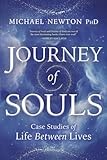
Journey of Souls: Case Studies of Life Between Lives
Michael Newton, Ph.D.
★★★★★ (4,800+ reviews) · $13.99
Newton’s landmark work — 29 case studies of people under hypnosis recounting their experiences between lives. The book that launched the field of Life Between Lives research.
Destiny of Souls: New Case Studies of Life Between Lives
Michael Newton, Ph.D.
★★★★★ (4,200+ reviews) · $11.50
The sequel to Journey of Souls — 67 new cases exploring soul groups, life planning, the Council of Elders, and soul advancement levels in the spirit world.

Life Between Lives: Hypnotherapy for Spiritual Regression
Michael Newton, Ph.D.
★★★★★ (900+ reviews) · $13.36
The professional guide to Newton’s LBL hypnotherapy method — used by certified practitioners worldwide to help clients explore their soul’s journey between incarnations.