The soul transition to the spirit world between lives is not — according to the accounts Michael Newton gathered — a single moment. It is a passage: from the body, through the early disorientation of departure, into the light, and then through a series of thresholds that feel, to those who have described them, more like coming home than arriving somewhere new. Newton’s subjects were remarkably consistent about this: the transition is gradual, and it is guided.
What if transition, in the spirit world, is not something to rush through but a place with its own texture, its own purpose, its own particular kind of beauty? Michael Newton’s subjects, regressed under hypnosis into the space between their lifetimes, described an intermediate zone — what Newton called the staging area — that many found unexpectedly significant. Chapter 6 of Journey of Souls maps this territory: the region between initial arrival and full integration into the soul group, where the soul completes its transition from physical to spiritual existence.
The Staging Area
After the initial healing period and orientation session, Newton’s subjects described a kind of gathering zone — a space of particular quality and character that felt neither like the immediate aftermath of arrival nor like the deeper territories of the spirit world where soul groups resided. Newton termed this the staging area, though his subjects used various descriptions: an antechamber, a meadow of light, a quiet space that felt like a deep exhale.
The staging area, in Newton’s accounts, served multiple functions. It was a place of continued integration — the soul completing the transition from the dense, particular experience of physical life to the more expansive, energetically lighter existence of the spirit world. Some subjects described feeling a kind of decompression here, as though the accumulated particularity of a human life — all its specific memories, attachments, sensory experiences, and emotional textures — was being gently metabolized rather than abruptly discarded.
It was also, Newton’s subjects noted, a place of anticipation. The knowledge that the soul group waited further in created a quality of pleasant suspense — not anxiety, but something closer to the feeling of coming home after a long trip, knowing a welcome waited but not quite there yet.
Moving Through the Layers
Newton’s subjects described the transition zone as existing within a layered structure — one of the most consistent elements across his thousands of sessions. The spirit world was not a single undifferentiated space but something more like an atmosphere with distinct zones, each accessible depending on the soul’s energetic state and development level.
The intermediate zone sat between the outer layers — those closest to the physical world, where displaced or earthbound souls sometimes lingered — and the deeper territories where more established soul groups operated. Moving through it required a kind of settling: the soul’s energy stabilizing, its frequency rising naturally as the weight of the physical lifetime continued to clear.
Subjects described this movement in various ways. Some experienced it as a gradual brightening — light becoming more vivid, colors more saturated, as they moved deeper into the spirit world. Others described it more kinesthetically: a sense of becoming lighter, more expansive, more themselves. Several used the language of waking up — not the abrupt, slightly disorienting waking of a physical morning, but a slow, deepening clarification, as though layers of fog were lifting one by one.
Newton observed that the pace of this movement varied considerably between souls. Younger souls, those with fewer lifetimes of experience, sometimes needed more time in the intermediate zone — more support, more gradual adjustment. More experienced souls might move through relatively quickly, the transition familiar territory from many previous returns.
Between Two Worlds
What Newton’s subjects found most striking about the staging area was its quality of genuine betweenness. It was not the physical world, with all its density and limitation. But it was also not yet the full experience of the spirit world — the reunion with the soul group, the access to deeper knowledge, the engagement with learning and preparation for the next lifetime.
It was its own thing: a space that existed specifically to hold the soul in transition, to give the integration process the time and environment it needed. Several subjects described it as deeply peaceful — a peace different from the peace of the tunnel or the healing period, more active and aware. They could reflect here. They could process. They could simply be, without the pressure of a physical life to be gotten on with.
Some subjects described encounters in the staging area with other souls who were also in transition — newly arrived from their own deaths, or lingering in the intermediate zone for their own reasons. These encounters were not random: Newton’s subjects described a sense that the spirit world had an organizing intelligence, that who you encountered and when was purposeful rather than arbitrary.
What This Means for Us
The staging area in Newton’s accounts offers something surprisingly relevant to physical life: a model for transition that doesn’t treat in-between states as failures or delays.
Our culture is deeply uncomfortable with transition. We want to know what comes next. We want to already be there, already adjusted, already functioning in the new reality. The space between — the staging area of grief, of change, of any significant shift — is treated as something to get through as quickly as possible rather than as a territory with its own value and purpose.
Newton’s subjects, describing the intermediate zone between their lifetimes, found it meaningful rather than merely transitional. The integration that happened there was not incidental to the journey — it was part of the journey. The soul needed that space to complete the shift from one mode of existence to another. Rushing through it would have meant arriving in the soul group before the transition was complete, before the physical lifetime had been fully metabolized.
This has application, if gently handled, to human grief and change. The space between who we were and who we’re becoming is not empty. It is doing something — processing, integrating, preparing. The soul, in Newton’s between-lives accounts, is given what it needs to make the transition fully before moving on. Perhaps we might offer ourselves the same.
The staging area is not the destination. But it is not nothing, either. It is the inhale before the exhale of homecoming — and in Newton’s subjects’ accounts, it was beautiful in its own quiet, interim way.
Related Articles
- Beginner Souls & First Incarnation: Newton\’s Findings
- Spirit Guides Between Lives: Michael Newton’s Research
- Soul Groups and Placement: Michael Newton’s Spirit World Map
- Life Review After Death: Soul Orientation Without Punishment
- Ghost Souls and Displaced Souls: Michael Newton’s Findings
Disclosure: As an Amazon Associate, Reincarnatiopedia earns from qualifying purchases. This helps support our research and publishing at no extra cost to you.
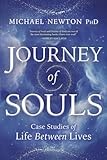
Journey of Souls: Case Studies of Life Between Lives
Michael Newton, Ph.D.
★★★★★ (4,800+ reviews) · $13.99
Newton’s landmark work — 29 case studies of people under hypnosis recounting their experiences between lives. The book that launched the field of Life Between Lives research.
Destiny of Souls: New Case Studies of Life Between Lives
Michael Newton, Ph.D.
★★★★★ (4,200+ reviews) · $11.50
The sequel to Journey of Souls — 67 new cases exploring soul groups, life planning, the Council of Elders, and soul advancement levels in the spirit world.

Life Between Lives: Hypnotherapy for Spiritual Regression
Michael Newton, Ph.D.
★★★★★ (900+ reviews) · $13.36
The professional guide to Newton’s LBL hypnotherapy method — used by certified practitioners worldwide to help clients explore their soul’s journey between incarnations.