What is the soul life purpose of an ordinary life — one without dramatic suffering or extraordinary achievement, one that leaves no obvious mark on the world? This question is at the heart of one of the most quietly profound stories in Memories of the Afterlife. A librarian in her mid-forties, competent and uncelebrated, discovers in her between-lives session that the between-lives space does not share our culture’s bias toward scale. Small, it turns out, is a category the soul doesn’t recognise.
That certainty was why she came to LBL therapy. She expected the between-lives experience to reveal a grand design she had been executing badly. What the session showed her, documented in Memories of the Afterlife (2009) by a certified Newton Institute therapist, was something that took her longer to accept: the design was not grand. And she had been executing it exactly as intended.
The Myth of the Remarkable Life
The therapist noted that the client arrived with a framework that is nearly universal in contemporary culture: the belief that a meaningful life is distinguishable from an ordinary one by its scale. That meaning is proportional to visibility, to achievement, to the size of the footprint a person leaves. In this framework, a life lived in the small registers — in daily kindnesses, in quiet reliability, in the accumulation of ordinary moments — is, at best, a consolation prize.
The LBL session began dismantling this framework from the first stages of the between-lives review.
The client recalled under LBL hypnosis a review process in which the council and her guides walked her through specific moments in her life. The moments selected were almost entirely ones she would not have selected herself. Not the times she had been most visible, most effortful, most self-consciously engaged in being a good person. The moments the review highlighted were smaller: a particular afternoon in the library when she had noticed a teenage boy sitting in the same chair every day for two weeks and had left a book — without explanation, without eye contact — on the table beside him. A conversation with a neighbor she had not known was in crisis, where she had said the exact right thing without knowing what it was. A habit she had of giving precise, unhurried attention to the most overlooked patrons — the elderly, the children too young to navigate the cataloguing system on their own.
The review was not showing her failures. It was showing her her work. And her work, from the between-lives perspective, was not what she had expected it to be.
What Small Acts Accomplish
According to Newton’s method, the soul that chooses a life of small, consistent acts of care and attention is not choosing a lesser form of soul work. In many documented LBL accounts, therapists note that this particular soul design — sometimes described as a «quiet contributor» or «weaver» soul type — is specifically valued in the spirit world’s developmental architecture for capacities that dramatic lives cannot develop.
The therapist noted that the client’s review showed the downstream effects of the small acts in ways that ordinary life made invisible. The teenage boy she had noticed had been in a specific kind of crisis that week; the book had been a lifeline that he had not been able to ask for. The neighbor’s crisis had been genuine; the conversation had been decisive in a way neither of them had understood at the time. The elderly patrons who received her unhurried attention were people who moved through most of their days without anyone looking directly at them.
The effect of being seen — fully, unhurriedly, without agenda — is not small. The client had been administering this particular form of care consistently, for decades, in ways that were invisible precisely because they were not performed for an audience. They were simply what she did, every day, because it was what she did.
According to Newton’s method, this is the hallmark of a soul that has developed what might be called mature quiet generosity: a form of soul expression that requires no witness, no recognition, no external confirmation. It operates in the gaps of grand narratives, in the spaces that visibility bypasses. It is, in the spirit world’s accounting, extremely difficult to maintain — because it requires a soul that genuinely does not need to be seen in order to act.
The Soul That Doesn’t Need Applause
One of the more surprising aspects of the council review, the therapist reported, was the quality of attention the council gave to what the client considered her most embarrassing admission: that she had always wanted to do something important, and had spent forty-three years suspecting she hadn’t.
The council did not dismiss the desire. But it contextualized it in a way that reframed the entire session. The longing for importance, from the between-lives perspective, was itself part of the curriculum. A soul that is learning to find meaning in small acts will naturally feel the cultural pull toward large ones — will feel the discrepancy between what she is doing and what the world tells her she should want to be doing. Sitting in that discrepancy, year after year, without abandoning the small acts in favor of the impressive ones, was not a failure. It was the assignment.
The client recalled under LBL hypnosis her guides using a specific image — she translated it as something like thread and cloth. The grand lives are the dramatic patterns, visible from a distance. But the cloth is made of thread: the innumerable small connections, the patient consistent presence, the unhurried attention. Without the weavers, there is no cloth for the patterns to appear on.
She was a weaver. She had always been a weaver. The desire to be a pattern was real, and she was allowed to feel it. But it was not the assignment she had come here to complete.
When Ordinary Is the Point
The therapist noted that what shifted most visibly for the client after the session was her relationship to her own days. The sense of missing something — the persistent conviction that she was supposed to be somewhere else, doing something more — did not dissolve immediately. But it became, she said, navigable in a way it had not previously been.
She could not un-feel the cultural framework that valued scale over depth. But she could see it as a framework, rather than as truth. And she could hold her own experience — the specific, daily, unhurried work of noticing people who needed to be noticed — as work in the fullest sense of the word.
According to Newton’s method, every soul designs its life with specific developmental intentions. The soul that designs a life of quiet contribution has not settled. It has chosen. The choice is just as deliberate, and just as demanding, as the choice to live a life of visible achievement — and in some respects more so, because it has to be sustained without the external validation that achievement provides.
What This Means for You
If your life feels ordinary, and the feeling of its ordinariness bothers you — if you have a persistent sense that you are supposed to be doing something more impressive than what you are actually doing — LBL accounts suggest something worth considering.
The soul’s economy does not run on visibility. The acts that register most significantly in the between-lives review, across documented Newton Institute cases, are consistently not the largest or the most public. They are the ones that were most genuinely given: the moments of unhurried attention, the specific kindness that arrived at the exact right time, the steady presence that someone relied on without knowing they did.
Your ordinary life is doing something. It may be doing the very thing you specifically came here to do. The question is not whether your acts are large enough to matter. The question is whether you are present enough, attentive enough, genuinely caring enough, to do them fully.
The cloth is made of thread. Someone has to weave it.
This story was uncovered through LBL therapy. Ready to explore your own? Find a certified therapist →
Related Articles
- Animal Souls and Past Lives: What a Goose Revealed
- Soul Mate Contracts: When Love Breaks You Open
- Violent Past Lives: How Karma Heals a Warrior Soul
- Experiencing the Council of Elders: A First-Person LBL Account
- Free Will and Past Life Regression: Moving Past Regret
Disclosure: As an Amazon Associate, Reincarnatiopedia earns from qualifying purchases. This helps support our research and publishing at no extra cost to you.
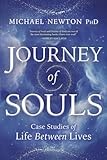
Journey of Souls: Case Studies of Life Between Lives
Michael Newton, Ph.D.
★★★★★ (4,800+ reviews) · $13.99
Newton’s landmark work — 29 case studies of people under hypnosis recounting their experiences between lives. The book that launched the field of Life Between Lives research.
Destiny of Souls: New Case Studies of Life Between Lives
Michael Newton, Ph.D.
★★★★★ (4,200+ reviews) · $11.50
The sequel to Journey of Souls — 67 new cases exploring soul groups, life planning, the Council of Elders, and soul advancement levels in the spirit world.

Life Between Lives: Hypnotherapy for Spiritual Regression
Michael Newton, Ph.D.
★★★★★ (900+ reviews) · $13.36
The professional guide to Newton’s LBL hypnotherapy method — used by certified practitioners worldwide to help clients explore their soul’s journey between incarnations.