Violent past life memories — and the karma attached to them — are among the most challenging material that past life regression can surface. This story from Memories of the Afterlife follows a man who accessed a life in which he had been Lothar: a large man in a cold climate who solved most problems with a blade and lost little sleep over it afterward. What came next — in the between-lives space, and in his current life — is a study in how karma actually works. Not as punishment, but as curriculum.
The man who recalled this under LBL hypnosis was a soft-spoken accountant in his forties. He had come to therapy because of what he described as disproportionate rage — flashes of anger so sudden and so far out of scale with their triggers that they frightened him. A car cutting him off. A colleague speaking to him in a particular tone. Something behind his eyes would go flat and hot, and for a moment, he would not recognize himself.
What the therapist uncovered over the course of the session, documented in Memories of the Afterlife (2009), was a soul working through one of the more demanding arcs in the curriculum of incarnation: the long process of integrating and transforming a capacity for violence that had once been a defining feature.
What Lothar Did and Didn’t Regret
The recall of the lifetime as Lothar was vivid and unsentimental, the therapist noted. The client did not romanticize what he saw. Lothar had been a raider — a man in a marauding band operating along the northern edges of an early medieval territory. Violence had been, for Lothar, completely ordinary. It had been the medium in which he had lived. He had not thought of himself as cruel. He had not thought of himself as good, either. He had thought of himself as effective.
What struck the client most, recalling the lifetime from the LBL perspective, was not the violence itself but the absence of interiority around it. Lothar had not agonized. He had not justified. He had simply acted, in the way that a person acts when a framework for questioning action has never been built. He had been, in a specific technical sense, morally undeveloped — not evil, but something earlier than evil, operating in a space before the questions that would eventually need to be answered had yet formed.
According to Newton’s method, souls at early stages of development often choose physically demanding, high-conflict lifetimes. The lessons available in such lifetimes are foundational: survival, will, the capacity to act. The problem comes when a soul stays too long in that register — when the capacity for forceful action develops far ahead of the capacity for compassion, empathy, or restraint.
Lothar had been that imbalance, embodied.
The Weight That Carries Across Lives
The session moved, as LBL sessions do, through the death of the previous lifetime and into the between-lives space. The client recalled Lothar’s death — abrupt, unsurprised, almost administrative — and then the shift into a different quality of awareness on the other side.
The therapist reported that what the client encountered in the between-lives space was significant: something the soul had been carrying from the Lothar lifetime that could not be left behind at death. Not guilt, exactly — guilt implies a moral framework that Lothar had not possessed. Something more like an unresolved frequency. A pattern of response that had been encoded so deeply that it persisted in the soul’s fundamental architecture.
According to Newton’s method, this is how karma actually functions — not as cosmic accounting, not as punishment, but as persistence. Patterns that are deeply grooved in a soul’s experience do not simply dissolve between lives. They carry. They show up in subsequent incarnations as tendencies, as sensitivities, as the specific kinds of rage or fear that arrive with an intensity that no current-life explanation fully accounts for.
The accountant’s disproportionate anger was Lothar. Not a curse, not a punishment — just an unresolved frequency from a very old way of being that the soul was still in the process of integrating.
The Soul’s Long Arc of Development
What LBL therapy allows, in cases like this one, is the possibility of seeing the full developmental context that a single lifetime cannot provide. The therapist noted that the client’s session covered not only the Lothar lifetime but subsequent ones — incarnations in which the same soul had chosen circumstances specifically designed to develop the capacities that Lothar had lacked.
A lifetime in which the client had been a woman, vulnerable, subject to exactly the kind of power that Lothar had exercised without thought. A lifetime in which the client had been a healer — a role that required sustained attention to another person’s suffering, the opposite of the attentional style that had characterized Lothar. A lifetime as a father of daughters, with all the particular softness that role had demanded.
The pattern was not random. It was, the therapist noted, quite clearly architectural — a soul that had identified, at some between-lives stage, a specific imbalance and had been constructing a curriculum designed to address it. Not penance. Development. The goal was not to punish Lothar but to grow beyond him.
According to Newton’s method, this is the fundamental logic of karma across multiple lifetimes. The soul does not cycle through lives collecting punishments for wrongs. It cycles through lives acquiring the full range of human capacities — including, crucially, the capacities that were absent or atrophied in earlier incarnations. The violent soul becomes, over time, the compassionate one. Not because it suffers enough to deserve it, but because it accumulates enough experience to genuinely understand what it had previously been unable to understand.
When the Past Life Is Still Running
The part of the session that shifted things most concretely, the therapist reported, was the moment the client understood the specific mechanism behind his present-day rage.
Lothar had survived by reading threat with extraordinary speed and responding to it with overwhelming force before it could fully materialize. That pattern — hyper-vigilant detection, instant escalation — had been adaptive in the marauding context. In the body of a middle-aged accountant in a contemporary office, it was producing the exact episodes the client had come to therapy to understand.
This was not a character flaw. It was not a chemical imbalance. It was an ancient skill, running in a context where it no longer served, not yet having received the signal that the circumstances had changed.
Understanding this did not, by itself, dissolve the pattern. But it gave the client a completely different relationship to the experiences of anger. Instead of being frightened of himself, he could recognize the activation for what it was: old information, a very old response system checking in. And he could, with that recognition, begin the process of consciously communicating with it — not suppressing it, but updating it.
What This Means for You
If you carry a pattern of response that feels disproportionate to your current life — anger that goes further than it should, fear that arrives without adequate cause, a capacity for something that makes you uncomfortable — LBL accounts suggest this deserves exploration rather than judgment.
The soul that spent lifetimes as a warrior is not a damaged soul. It is a soul with specific, hard-won capacities that were appropriate in one context and have not yet been fully integrated into a different one. The intensity itself is not the problem. The problem is only that it is still running on old instructions.
What LBL therapy offers in cases like these is not the revelation that you were a terrible person in a past life and now you are paying for it. The framework is more precise and, ultimately, more generous than that. You were someone who was developing certain capacities at the expense of others. And you have been, across subsequent lifetimes, doing the work of developing what was missing.
The accountant who had once been Lothar was not a violent man. He was a man with a violence he was still learning how to hold. The distinction is not small. Lothar was a chapter. The soul was something much larger — something that had chosen that chapter because it needed what that chapter contained, and had been expanding, lifetime by lifetime, ever since.
This story was uncovered through LBL therapy. Ready to explore your own? Find a certified therapist →
Related Articles
- Animal Souls and Past Lives: What a Goose Revealed
- Soul Mate Contracts: When Love Breaks You Open
- Experiencing the Council of Elders: A First-Person LBL Account
- Free Will and Past Life Regression: Moving Past Regret
- Soul Life Purpose: Completing Your Jigsaw Puzzle Between Lives
Disclosure: As an Amazon Associate, Reincarnatiopedia earns from qualifying purchases. This helps support our research and publishing at no extra cost to you.
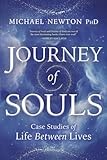
Journey of Souls: Case Studies of Life Between Lives
Michael Newton, Ph.D.
★★★★★ (4,800+ reviews) · $13.99
Newton’s landmark work — 29 case studies of people under hypnosis recounting their experiences between lives. The book that launched the field of Life Between Lives research.
Destiny of Souls: New Case Studies of Life Between Lives
Michael Newton, Ph.D.
★★★★★ (4,200+ reviews) · $11.50
The sequel to Journey of Souls — 67 new cases exploring soul groups, life planning, the Council of Elders, and soul advancement levels in the spirit world.

Life Between Lives: Hypnotherapy for Spiritual Regression
Michael Newton, Ph.D.
★★★★★ (900+ reviews) · $13.36
The professional guide to Newton’s LBL hypnotherapy method — used by certified practitioners worldwide to help clients explore their soul’s journey between incarnations.