The soul mate contract behind a devastating love — the idea that the person who broke you open most completely did so by pre-agreement, for reasons that only become visible from the soul’s longer view — is explored with unusual honesty in this story from Memories of the Afterlife. She had not come to past life regression looking for consolation. She had come, after years of failed understanding, looking for truth. What she found in her session was both harder and more liberating than she had expected.
That feeling — not grief exactly, more like an unfinished sentence — was what brought her to LBL therapy. What she found there, documented in Memories of the Afterlife (2009) by a certified Newton Institute therapist, was a love story that was far older than either of them, operating on terms that neither of them had consciously agreed to.
The Familiar Soul
The therapist reported that the client’s recognition of her former partner in the between-lives space was immediate and, characteristically, complicated. She had not expected to encounter him there. She had come to the session still holding some version of the story in which he was simply someone who had hurt her, and then she found herself recognizing his soul with a quality of knowing that was entirely different from the anger she had organized her recovery around.
The recognition carried history. Not the history of their four years together, but a much longer history — the sense of a connection that had been visited many times, in many forms, with the specific texture of something that kept coming back not because it was complete but because it was not yet finished.
According to Newton’s method, what people commonly call soul mates are real, but rarely what romantic culture imagines them to be. They are not souls that are simply destined to be together in every lifetime, harmoniously completing each other. They are souls with longstanding, complex contracts — arrangements made before incarnation to encounter each other in specific circumstances for specific developmental purposes. The encounter is purposeful. The relationship is not always easy. The soul mate is often the person who challenges you most precisely because they have agreed to.
What Was Agreed Before They Were Born
The client recalled under LBL hypnosis what the therapist described as a pre-life planning session — a meeting between her soul and her partner’s soul, in the presence of their guides, in which the shape of the relationship had been laid out. Not in the way a script is written, but in the way an architectural drawing maps load-bearing elements: here are the points of contact, here are the intended stresses, here is what this structure is built to accomplish.
The intended stresses had included exactly what she had experienced. The specific quality of the betrayal — not infidelity but abandonment, the sudden disappearance of emotional presence from someone who had seemed entirely available — had been, she recalled, noted in the agreement. Not because either soul wanted her to be hurt, but because her soul had identified that particular wound as exactly what she needed in order to develop a specific capacity she had been avoiding.
The capacity was self-containment. The client had spent her life organizing herself around other people’s emotional states — available, attuned, reliable in the way that people who have never fully trusted their own company tend to be. The relationship had given her everything she had organized her life around. Its ending had taken it away completely. And in the rubble of it, she had discovered, for the first time, that she could exist without an external emotional anchor.
She had not wanted to discover this. She had wanted the relationship back. But the therapist noted that when the client viewed the intended arc of the experience from the LBL perspective, there was a recognition she could not quite argue with: she was, in fact, different. The thing she had been trying to develop — a stable, internal sense of herself that did not depend on being witnessed — had actually developed. The catastrophe had worked.
The Karmic Debt That Wasn’t
One of the things the client had constructed in the aftermath of the relationship was a story about karmic debt — a narrative in which she had been punished for something in a past life, or in which he was a karmic enemy working off some ancient score. It was, she acknowledged, not a particularly dignified story, but it had the advantage of making the pain feel like it meant something.
The LBL session replaced this narrative with something more precise and more useful. The therapist reported that the client found, in her between-lives review of the relationship, no evidence of punishment or debt in the conventional sense. What she found instead was a long history of two souls that had been working on a complementary developmental project across several lifetimes — a project in which they had alternated roles, with each serving in different lifetimes as both supporter and destabilizer of the other.
According to Newton’s method, karmic relationships are not primarily about settling scores. They are about completing curriculum. Two souls that keep returning to each other are not trapped in a punishment cycle. They are, in most documented cases, working on something specific together — something that requires the particular chemistry of their encounter, the precise way that each brings out in the other what would not otherwise be accessible.
The man who had broken her heart had agreed to do exactly that. It was not the only dimension of what they had been to each other — she recalled significant tenderness in the history as well. But it was the dimension that this particular life had required. He had played his part with, she noted, considerable skill. She was not sure she would thank him for it. But she could not, having seen what she had seen, maintain the story that he was simply someone who had done something wrong to her.
What Heartbreak Is For
The therapist reported that what stayed with the client most durably after her session was a reframing of romantic pain that she had not expected to find useful but couldn’t put down: the idea that the most significant relationships in a person’s life are rarely the ones that flow easily, and that the ones that hurt most are not the failed ones.
According to Newton’s method, a soul contracts into difficult relationships precisely because those relationships will accomplish something that easier ones cannot. The comfort and consistency of a stable, loving partnership develops certain capacities. The destabilization of a relationship that cracks you open develops entirely different ones. Neither is superior. The soul chooses the one it currently needs.
What this reframing gave the client was not forgiveness, exactly — she was not sure she owed him that, and the LBL framework did not ask it of her. What it gave her was the ability to stop treating the relationship as a mistake. It had not been a mistake. It had been a specific assignment, contracted for in advance, executed with a precision she could now reluctantly admire.
What This Means for You
If you have carried a love story that broke you in a way that nothing else has quite repaired — if the feeling that persists is less anger than incompleteness, less pain than a nagging sense that there was something there you were supposed to understand — LBL accounts suggest that instinct is worth following.
The most powerful romantic encounters in a life are rarely random. They carry the weight of history, of prior contract, of specific developmental intentions that only become visible from the vantage point outside ordinary time. The relationship that hurt you most was not, in all probability, a sign of your poor judgment or your bad luck. It may have been exactly what you came here to experience, carried out by someone who agreed, before you were born, to show up in your life in precisely that way.
That framing does not erase the pain. It gives it a purpose. And sometimes, a purpose is what the heart has been looking for all along.
This story was uncovered through LBL therapy. Ready to explore your own? Find a certified therapist →
Related Articles
- Spiritual Awakening Through Past Life Regression: Head to Heart
- Animal Souls and Past Lives: What a Goose Revealed
- Violent Past Lives: How Karma Heals a Warrior Soul
- Experiencing the Council of Elders: A First-Person LBL Account
- Free Will and Past Life Regression: Moving Past Regret
Disclosure: As an Amazon Associate, Reincarnatiopedia earns from qualifying purchases. This helps support our research and publishing at no extra cost to you.
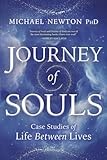
Journey of Souls: Case Studies of Life Between Lives
Michael Newton, Ph.D.
★★★★★ (4,800+ reviews) · $13.99
Newton’s landmark work — 29 case studies of people under hypnosis recounting their experiences between lives. The book that launched the field of Life Between Lives research.
Destiny of Souls: New Case Studies of Life Between Lives
Michael Newton, Ph.D.
★★★★★ (4,200+ reviews) · $11.50
The sequel to Journey of Souls — 67 new cases exploring soul groups, life planning, the Council of Elders, and soul advancement levels in the spirit world.

Life Between Lives: Hypnotherapy for Spiritual Regression
Michael Newton, Ph.D.
★★★★★ (900+ reviews) · $13.36
The professional guide to Newton’s LBL hypnotherapy method — used by certified practitioners worldwide to help clients explore their soul’s journey between incarnations.