Animal souls and past lives — the possibility that consciousness is not exclusive to human incarnation — is one of the more quietly radical ideas in Newton’s body of work. This story from Memories of the Afterlife centres on a woman whose inexplicable pull toward geese led her, in regression, to a past life that explained everything. What she found reframed not just her feeling about birds, but her understanding of what soul evolution actually looks like across its full range.
She mentioned it almost as an aside at the beginning of her LBL session — a small embarrassing detail, the kind you share when you are trying to hand over the full picture. Neither she nor the therapist expected it to become the center of what the session would reveal. But when the regression moved into the between-lives space, what arrived was not a human life. It was feathers, altitude, and a quality of perception she had no words for in her current language.
The case, documented in Memories of the Afterlife (2009) by a certified Newton Institute therapist, raised questions that the field of LBL therapy has been exploring with increasing seriousness: what is the nature of animal consciousness, and can a soul inhabit a non-human form?
The Experience of Being the White Goose
The therapist reported that the client’s entry into the non-human life was physically specific in a way that took both of them by surprise. She described the shift in perception first — a widening, a panoramic quality that felt nothing like human vision, and yet was immediately familiar. Then the weight: lighter than she expected, the body aerodynamically logical in a way she could feel rather than analyze. Then, unexpectedly, the flock — and the extraordinary sensory experience of moving through air in close formation with other beings whose bodies she could feel in her own body as a kind of magnetic field.
What she did not find, she noted, was absence. The experience of being the goose was not the absence of interiority. It was a different kind of interiority — present, sensory, embedded in the collective life of the flock in a way that her human mind had no ready template for. Something was operating in there. It registered the world. It responded to it. Whether it constituted consciousness in a philosophically robust sense was a question that did not, she said, seem relevant from inside it.
According to Newton’s method, the nature of animal souls is one of the more contested areas of LBL research, and Newton himself was careful to present the evidence without overreaching. What the accumulated accounts do suggest is that the division between human souls and non-human experience may be less absolute than conventional frameworks assume. Whether souls transit between species, whether animal experience represents an earlier developmental stage, or whether something else is occurring in cases like this one remains genuinely open.
The Flock as a Soul Group
What struck the therapist most about this session was not the claim that the client had been an animal — startling as that was — but the structural parallels between what the client described and what human LBL accounts describe about soul groups.
The flock was not simply a collection of birds. It was, in the client’s experience of it, organized by relationships — by specific affinities, by patterns of proximity, by what she could only describe as familiarity. There were particular geese she was always near. There were configurations within the flock that felt chosen rather than random. The collective movement — the V-formation, the shared navigation — was experienced not as instinct in the mechanical sense but as something more like coordinated intention, distributed across the group.
According to Newton’s method, human soul groups — the clusters of souls that incarnate repeatedly in relation to each other — have precisely this quality: organized by affinity, maintained across lifetimes, characterized by a sense of returning home when the group reconvenes. The parallel the client’s experience drew between the flock and a soul group was not one she had constructed intellectually. It was one she noticed, after the session, when she tried to find language for what she had experienced.
What the Animal Life Contributed to the Soul’s Development
The question that the therapist and client spent time with after the regression was: what had the goose lifetime contributed? What had the soul taken from it?
According to Newton’s method, every incarnate experience — whether in a human body or otherwise — contributes something to the soul’s developing understanding of existence. The specific contribution of the goose lifetime, as the client experienced it, was harder to articulate than a human lifetime would have been, but no less real.
What she had experienced in that life was a form of belonging that had no equivalent in her human experience — a belonging so complete, so physical, so mutually constituted by the bodies of others that the question of individual identity had been largely dissolved. The goose had not wondered whether it belonged. It had been belonging, as a constant condition.
The therapist noted that the client had described, in the intake interview, a lifelong difficulty with belonging — a persistent sense of being slightly outside, slightly apart, observing rather than inhabiting her own life. The goose lifetime offered a felt memory of what belonging, at its most total, actually felt like. Not as an instruction, but as a reference point. A reminder that her soul had experienced it, and could orient toward it.
The Question of Consciousness Beyond the Human
For many people, the idea that a soul might inhabit an animal form is either immediately intuitive or immediately absurd. The cases documented in Memories of the Afterlife do not resolve this question. They do complicate easy dismissal.
The client in this session was not someone given to mysticism. The therapist noted that she was practical, professionally competent, skeptical by temperament, and had come to LBL therapy looking for answers to specific questions about her current life — not expecting to find herself in the body of a goose over what she estimated was northeastern Europe several centuries ago.
The experience did not convert her to a particular belief system. What it gave her was what most LBL experiences give most clients: a direct encounter with something her ordinary framework could not account for, which had the effect of widening the framework itself. She could not un-know what she had experienced. She could not fit it back into the prior categories.
What This Means for You
The bond you feel with a particular animal — the dog who seemed to understand you at a level that surprised you, the bird whose presence stopped you somewhere you can’t explain — may be carrying more information than ordinary interpretation allows.
LBL accounts do not prove interspecies soul connection. They do document it, repeatedly, in the accounts of people who arrive with no expectation of finding it. The consistency of the pattern across unrelated clients and different therapists is one of the things that makes it worth taking seriously.
Whether or not you pursue this through formal LBL therapy, the irrational pull you feel toward particular animals or species is worth treating as information rather than sentiment. Your soul has a history. That history may be wider, and stranger, and more inhabited than the human story you currently have access to.
This story was uncovered through LBL therapy. Ready to explore your own? Find a certified therapist →
Related Articles
- Soul Mate Contracts: When Love Breaks You Open
- Violent Past Lives: How Karma Heals a Warrior Soul
- Experiencing the Council of Elders: A First-Person LBL Account
- Free Will and Past Life Regression: Moving Past Regret
- Soul Life Purpose: Completing Your Jigsaw Puzzle Between Lives
Disclosure: As an Amazon Associate, Reincarnatiopedia earns from qualifying purchases. This helps support our research and publishing at no extra cost to you.
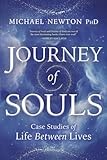
Journey of Souls: Case Studies of Life Between Lives
Michael Newton, Ph.D.
★★★★★ (4,800+ reviews) · $13.99
Newton’s landmark work — 29 case studies of people under hypnosis recounting their experiences between lives. The book that launched the field of Life Between Lives research.
Destiny of Souls: New Case Studies of Life Between Lives
Michael Newton, Ph.D.
★★★★★ (4,200+ reviews) · $11.50
The sequel to Journey of Souls — 67 new cases exploring soul groups, life planning, the Council of Elders, and soul advancement levels in the spirit world.

Life Between Lives: Hypnotherapy for Spiritual Regression
Michael Newton, Ph.D.
★★★★★ (900+ reviews) · $13.36
The professional guide to Newton’s LBL hypnotherapy method — used by certified practitioners worldwide to help clients explore their soul’s journey between incarnations.