The Spirit World: Michael Newton Map of the Afterlife
The Spirit World, as conceptualized by Dr. Michael Newton through his pioneering research, represents a detailed, structured model of the non-physical dimension souls are said to inhabit between physical incarnations. Often termed the Michael Newton Map of the Afterlife, this model is not based on religious doctrine but on the thematic patterns and consistencies reported by hundreds of subjects under deep hypnosis. Newton’s work, falling under the category of Life Between Lives (LBL) therapy, provides a comprehensive, evidence-based framework for understanding the soul’s journey, purpose, and home outside of the physical body. This article outlines the core features, research methodology, and significance of this influential map within the field of reincarnation studies.
Michael Newton and the Foundation of Life Between Lives Research
Dr. Michael Newton (1931-2016) was a certified Master Hypnotherapist and a credentialed counseling psychologist. Initially skeptical of [past life regression], his work evolved when clients, regressed to a time before birth, began spontaneously describing experiences in a spiritual realm. Intrigued by the consistency of these accounts, Newton shifted his focus from past lives to the intermission period between them. Over several decades, he conducted and documented over 7,000 case studies, developing a specialized hypnosis technique to guide subjects into the deepest state of superconsciousness, where they could access memories of the spirit world. His findings were published in two seminal books: Journey of Souls: Case Studies of Life Between Lives (1994) and Destiny of Souls: New Case Studies of Life Between Lives (2000).
Core Principles and Methodology
Newton’s approach was rigorously empirical within its field. He avoided leading questions, instead asking open-ended prompts like «What are you experiencing now?» or «Describe your surroundings.» The map was constructed from the convergent narratives of hundreds of individuals—of diverse cultural, religious, and ethnic backgrounds—who described similar environments, processes, and hierarchies without prior knowledge of each other’s accounts. The consistency across cases, including specific terminology used independently by subjects, formed the basis of his model. This research is considered a cornerstone of modern [soul research], offering a non-religious, structured view of the afterlife focused on soul evolution and learning.
The Structure of the Spirit World: A Guided Tour
The Newtonian map depicts the spirit world as a vast, organized system of energy and consciousness, designed for healing, review, instruction, and planning. The following sections outline its primary features as commonly reported.
The Initial Transition: Death and Arrival
Upon physical death, souls describe a rapid detachment from the body and a journey through a tunnel or conduit toward a brilliant, loving light. They are typically met by one or more familiar guide souls or a welcoming committee of close soul group members. This initial stage is characterized by immense relief, the shedding of earthly pain, and a return to a core energetic identity. The soul then proceeds to a restoration or healing area, often described as a garden, clinic, or energy chamber, where the traumas and attachments of the last life are cleansed, and the soul’s vitality is restored.
The Life Review and Council of Elders
A central, nearly universal feature is the life review. Here, the soul re-experiences key events from the life just lived, not from its own perspective alone, but also from the perspectives of every other person affected by its actions. This is described as a non-judgmental, educational process focused on understanding cause, effect, and emotional impact. Following this, many souls report meeting with a Council of Elders—highly advanced, loving beings who are not deities but wise teachers. With the soul’s primary guide present, the council helps the soul analyze its progress, understand unresolved karmic lessons, and discuss potential directions for future growth.
Soul Groups and the Primary Cluster
The most socially significant aspect of Newton’s spirit world is the soul group. Souls are said to eternally belong to a cluster of 3 to 25 souls (on average) that share a deep, eternal bond and a similar level of spiritual development. These groups are often described as our true «spiritual family.» Between lives, souls reunite with their group in familiar, often idyllic settings to share experiences, offer support, and learn from one another. Members frequently incarnate together, playing various roles (as family, friends, or adversaries) to facilitate mutual learning. The guide soul is often a senior member of this cluster or a closely associated group.
Learning, Planning, and the Selection of a New Life
The spirit world is depicted as a place of continuous education. Souls may attend learning centers or «temples of wisdom» where they study universal principles, observe future technological or social developments on Earth, or practice energy manipulation. A crucial phase is the planning of the next incarnation. With the guidance of their primary guide and sometimes a life selection committee, the soul reviews potential lives, bodies, families, and key challenges. The choice is presented as a collaborative effort aimed at selecting the optimal conditions for addressing karmic debts, learning specific lessons (like patience, forgiveness, or courage), and fulfilling a soul’s mission. The concept of free will remains paramount; the soul ultimately chooses its life path, albeit with expert counsel.
Significance and Contributions to Afterlife Studies
Michael Newton’s work provided a paradigm shift in [afterlife studies], moving the discussion from faith-based belief to a structured, report-based model derived from experiential data.
Therapeutic Impact and Validation
The primary validation of Newton’s map lies in its therapeutic efficacy. Clients undergoing LBL therapy frequently report profound psychological healing, liberation from the fear of death, a clearer understanding of life’s purpose, and resolution of grief. The Newton Institute (founded by his students) has trained thousands of practitioners worldwide, who continue to report consistent client narratives that align with Newton’s original findings. While not scientifically verifiable by conventional materialist standards, the model’s internal consistency and therapeutic outcomes form its evidence base.
Comparison with Other Models and Perspectives
Newton’s spirit world shares similarities with concepts in various wisdom traditions—such as the Buddhist Bardo, the idea of soul families, and learning between lives—but is distinct in its systematic, non-denominational detail. It differs from traditional religious heavens or hells by emphasizing continuous evolution over static reward or punishment. Some researchers in [near-death experience] (NDE) studies note overlaps, particularly in the initial light, life review, and loving presence. However, Newton’s subjects, in deep hypnosis, provide a more prolonged, detailed exploration of the ongoing environment than the typically brief NDE report. Critics, often from scientific materialism, argue that the experiences are products of the subconscious, drawing from cultural tropes and the hypnotist’s expectations. Newtonians counter that the consistency across diverse, unprepared subjects and the specific, unexpected details reported (which practitioners claim they would not have imagined) support the model’s validity.
Legacy and Continuing Research
Michael Newton’s legacy is immense. He established Life Between Lives as a recognized modality within transpersonal psychology. The Newton Institute continues to certify LBL facilitators and collect case data, which largely reinforces and occasionally refines the original map. His work has inspired further academic and clinical exploration into the nature of consciousness and the possibility of the soul’s survival. For many, the Newtonian map offers a coherent, comforting, and purpose-driven vision of existence that bridges spiritual inquiry with a therapeutic, evidence-grounded approach.
See Also
- [Past Life Regression]: The therapeutic technique of recalling memories of previous incarnations, often a precursor to LBL work.
- [Soul Groups and Soulmates]: Exploration of the eternal bonds between souls as described in spiritual and research contexts.
- [The Life Review Process]: A detailed look at the post-mortem evaluation of a life’s events, common in NDE and LBL reports.
- [Hypnotherapy in Spiritual Research]: The use of clinical hypnosis to investigate past lives, the afterlife, and superconscious states.
- [Evidence for Reincarnation]: An overview of empirical research, including cases of children with past-life memories and birthmark studies.
Related Articles
- Spirit Guides in Michael Newton Research: Who They Are and What They Do
- Who Is Michael Newton: The Psychologist Who Mapped the Afterlife
- What Happens to the Soul at the Moment of Death: Michael Newton’s Cases
- The Council of Elders: Michael Newton on the Wise Beings Between Lives
- Soul Groups Explained: Primary Clusters and Soul Colors
Disclosure: As an Amazon Associate, Reincarnatiopedia earns from qualifying purchases. This helps support our research and publishing at no extra cost to you.
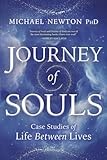
Journey of Souls: Case Studies of Life Between Lives
Michael Newton, Ph.D.
★★★★★ (4,800+ reviews) · $13.99
Newton’s landmark work — 29 case studies of people under hypnosis recounting their experiences between lives. The book that launched the field of Life Between Lives research.
Destiny of Souls: New Case Studies of Life Between Lives
Michael Newton, Ph.D.
★★★★★ (4,200+ reviews) · $11.50
The sequel to Journey of Souls — 67 new cases exploring soul groups, life planning, the Council of Elders, and soul advancement levels in the spirit world.

Life Between Lives: Hypnotherapy for Spiritual Regression
Michael Newton, Ph.D.
★★★★★ (900+ reviews) · $13.36
The professional guide to Newton’s LBL hypnotherapy method — used by certified practitioners worldwide to help clients explore their soul’s journey between incarnations.