What Happens to the Soul When the Body Dies?
Few questions carry as much weight as this one. According to the research of American psychologist [Michael Newton], who spent more than four decades conducting deep hypnosis sessions with thousands of subjects, the moment of physical death marks the beginning of an orderly and ultimately joyful transition — not an ending, and emphatically not the chaos of judgment and punishment that many religious traditions have taught. Newton’s subjects, drawn from every background and belief system, described their experiences at the moment of death and immediately after with a consistency that Newton himself found impossible to dismiss.
Newton was careful to note that his method differs significantly from near-death experience (NDE) research. Where NDE subjects are clinically dead for only a few minutes and recall their experience afterward under full conscious awareness, Newton’s clients were in a sustained deep hypnosis state — what he called the theta state — for sessions lasting three to four hours, free of body trauma and able to describe their experiences in calm, careful detail.
The First Moment: Rising from the Body
Across thousands of cases, Newton’s subjects described the immediate post-death experience in strikingly similar terms. «At the moment of death, you rise above your body and you look back at it,» Newton explained. The soul — which Newton consistently described as a form of intelligent energy — separates from the physical body and perceives it from above.
What is uppermost in the mind of the newly departed soul, Newton reported, is not disorientation or fear. It is the impulse to comfort. «All souls will try to reach out and comfort those who are mourning their deaths,» he said. «They will try to reach into their minds and soothe them in various ways and give them through powerful thought messages the understanding that they’re still alive.» Sometimes grief creates a barrier — the bereaved person is too overwhelmed to receive these impressions — and the messages may not get through for days, weeks, or even months. But the intent is always there.
The subjective experience of the departing soul, Newton found, is typically one of profound relief. «Most people feel two things. They feel freedom and they feel joy at the moment of death,» he reported. «Oh my God, I’m not dead» was a statement he heard repeatedly from subjects recalling the moment of separation. As the soul rises from the body, all memories of previous lifetimes flood back, and the soul recognizes the life just lived as one chapter among many.
Beginner and Advanced Souls: Two Different Experiences
Newton found meaningful differences in how souls of different levels of experience navigate the moments immediately following death. Younger souls — those who have lived relatively few incarnations — sometimes struggle to fully disengage. According to Newton’s research, these souls may linger near the physical world because they feel reluctant to leave, or because they are disoriented.
«The beginner soul, that is the person who has not lived all that many lives, sometimes has difficulty separating from their body — not that they’re not released at the moment of death, but they hang around,» Newton explained. «They want to go to their funerals. These people will describe how they want to find out who’s coming to their funeral, who’s bringing flowers, how much respect is their body being shown.» He noted, with a touch of dry humor, that «we’re so vain» — even in death.
More experienced souls, by contrast, tend to leave quickly and without hesitation. As Newton put it, they know the spirit world is home, and they are ready to return. «Earth is not our home,» he said plainly in one interview. «It is a temporary classroom. It’s a school — a very difficult school.»
The disturbed souls — those who have suffered traumatic deaths, violent lives, or the compounding burden of young souls in very difficult bodies — may carry residual distress into the early transition. Newton did not interpret this as punishment, but as a natural consequence of the soul being, in his words, «contaminated by the human body through all sorts of genetic influences and environmental influences that has caused a very difficult life.»
The Tunnel, the Light, and the First Guides
Following separation from the body, Newton’s subjects consistently described entering what is now popularly called the tunnel of light — the same phenomenon reported by near-death experiencers. «As they pull away, souls describe bright lights and tunnels, the same as the folks that tell us who have had near-death experiences,» Newton confirmed.
What comes next, however, diverged sharply from many popular accounts. Newton reported that in all his thousands of cases, not one subject described encountering a religious figure — no Jesus, no Buddha, no Mohammed — at the moment of crossing. What they did encounter were their spiritual guides: «loving beings who are their teachers who come to them at the moment of death to guide them into the spirit world.»
Alongside guides, souls often encounter people they knew in the life just ended who died before them — a mother, a close friend, a sibling — who come to welcome them back. «It’s a very ennobling and beautiful experience for them,» Newton said.
These guides and welcoming figures do not typically appear in their true energetic form. Instead, they project a familiar face — one the newly arrived soul will recognize and find comforting. Newton’s subjects described seeing these beings initially as a pinpoint of light, then a misty shape, gradually resolving into recognizable features. «Maybe this is where some of our mythology about ghosts comes from,» he mused, noting that subjects often described seeing these figures without anything visible below the waist — «essentially they see a light form coming, misty, if you will.»
No Demons, No Hell: What Newton’s Subjects Did Not Find
One of the most striking findings across Newton’s entire body of research was the complete absence of demonic figures, punitive judgments, or anything resembling a hell. «No one that I have ever put into hypnosis has ever seen any demonic figures or hell of any kind,» he stated flatly.
Newton did not dismiss NDE accounts that described such experiences, but offered an explanation rooted in the mechanics of consciousness. In near-death experiences, the conscious mind is not suppressed the way it is in deep hypnosis — the person has just been struck by a car, or is on an operating table. «Their conscious mind is on overload and all of those fears and anxieties that they have had in their walking around state about life after death is coming back to haunt them,» Newton suggested. He believed the bright lights and tunnels in NDE reports were genuine, while the demonic imagery reflected «preconditioning» — fears and expectations built up over a lifetime rather than actual features of the afterlife.
According to Newton’s subjects, the spirit world is «a place of love, forgiveness, and kindness.» Souls who committed serious wrongdoing in life are taken, he reported, not to hell but to «an area of isolation where they are given orientation sessions in terms of what it is that they did and why they did it.» There is, Newton noted, also what he described as energy reshaping. And those who caused harm tend, of their own free will, to volunteer to return as victims in subsequent lives in order to understand what they inflicted from the other side.
Orientation: The Private Review
After the initial greeting from guides and loved ones, Newton’s subjects described moving into a period he called orientation — a quiet, private review of the life just lived. A spirit guide accompanies the soul into a calm setting, and there the soul begins to unwind and re-energize. This is an informal, intimate process: how did you feel about how you conducted your life? Where were the shortcomings? What went well?
This private review is distinct from the later, more formal meeting with the [Council of Elders] that Newton’s subjects also described. The orientation is a first pass — a gentle coming-to-terms — before the soul moves on to reunite with its [soul group] in what Newton called the soul’s true home in the spirit world.
Conclusion: Death as Transition
Taken together, Newton’s reported findings present death not as an ending but as a structured, benevolent process of return. The soul leaves the body, comforts those left behind, moves through a tunnel of light, is met by guides and loved ones, and enters a process of review and reunion. According to Newton’s accounts, the predominant experience is relief, recognition, and joy.
«My clients describe death as something that is very, very beautiful for them,» Newton said. «They rise out of their bodies. They realize that they’re an immortal being. And all of their memories of all of who they are as souls and all of their past lives come crashing in, and they realize that this life they have just lived is transitory.»
Note: The findings described in this article reflect Michael Newton’s accounts of his research conducted through hypnosis sessions. They represent one perspective within the broader field of consciousness studies and are not presented here as established scientific fact. For information about end-of-life support resources, please consult a qualified healthcare professional.
See Also
- [Michael Newton: The Psychologist Who Mapped the Afterlife]
- [Soul Groups: Michael Newton’s Research]
- [The Council of Elders in Newton’s Model]
- [Spirit Guides: Who They Are and How They Help Souls]
- [The Life Review After Death: Orientation]
Related Articles
- Soul Groups Explained: Primary Clusters and Soul Colors
- What Happens Immediately After Death: The First 49 Days
- The Spirit World: Michael Newton Map of the Afterlife
- The Council of Elders: Michael Newton on the Wise Beings Between Lives
- Spirit Guides in Michael Newton Research: Who They Are and What They Do
📚 Books by Michael Newton
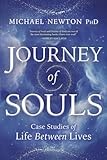
Journey of Souls: Case Studies of Life Between Lives
Michael Newton, Ph.D.
★★★★★ (4,800+ reviews) · $13.99
Newton’s landmark work — 29 case studies of people under hypnosis recounting their experiences between lives. The book that launched the field of Life Between Lives research.

Destiny of Souls: New Case Studies of Life Between Lives
Michael Newton, Ph.D.
★★★★★ (4,200+ reviews) · $11.50
The sequel to Journey of Souls — 67 new cases exploring soul groups, life planning, the Council of Elders, and soul advancement levels in the spirit world.

Life Between Lives: Hypnotherapy for Spiritual Regression
Michael Newton, Ph.D.
★★★★★ (900+ reviews) · $13.36
The professional guide to Newton’s LBL hypnotherapy method — used by certified practitioners worldwide to help clients explore their soul’s journey between incarnations.